The India–Oman Comprehensive Economic Partnership Agreement (CEPA) officially came into effect on June 1, 2026.
- Originally signed in December 2025, this major agreement creates a strategic economic link by cutting trade taxes on labor-heavy sectors and offering a highly secure shipping path to the Gulf region.
UPSC Online Classes
Key Outcomes
- Immediate Duty Clearance: Oman has dropped import taxes down to zero on 99.38% of Indian goods by value.
- This covers 98.08% of all product lines, a major leap from the previous 15.33% standard.
- Fast Track for Medicines: Medical treatments and vaccines already approved by global regulators (like the USFDA or European EMA) will secure Omani marketing permits within 90 days, eliminating repeated testing.
- Better Corporate Move Rules: The limit for moving employees internally within multinational companies has risen from 20% to 50%.
- Corporate specialists can stay up to 4 years, and business visitors get 90 days.
- Mutual Standard Approvals: Oman will accept inspection paperwork from India’s Export Inspection Council (EIC), along with recognizing India’s national organic food program (NPOP) and domestic halal certificates.
- National Programme for Organic Production (NPOP): India’s official organic certification system, implemented by APEDA, which sets standards for organic farming, processing, and exports.
- Domestic Halal Certificates: Certificates issued by halal certification bodies confirming that products follow Islamic dietary standards for domestic and export markets.
About Comprehensive Economic Partnership Agreement (CEPA)
A CEPA is an all-inclusive, deep-integration bilateral trade pact designed to modernize economic teamwork. Moving far past simple product tax reductions, this treaty establishes a shared regulatory framework covering:
- Smooth trade of physical goods and materials.
- Open access across 127 service sub-sectors.
- Clear mobility rules for skilled workers and professionals.
- Joint cooperation on business rules and standardizations.
- With this deal, India becomes only the second nation in the world—following the United States—to secure a comprehensive bilateral trade treaty with the Sultanate of Oman.
About India-Oman Economic Relations
Bilateral trade between both countries has shown steady growth despite global shipping challenges:
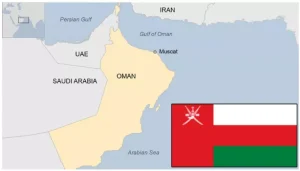
- Trade Volume: Total trade grew to $11.18 billion in FY 2025-26, up from $10.61 billion the prior year.
- India’s Export Mix ($3.64 Billion): Led by refined energy items like petrol ($781 million) and naphtha ($746 million), alongside iron, steel, machinery, and basmati rice.
- India’s Import Mix ($7.20 Billion): Dominated by raw crude oil ($1.6 billion), liquefied natural gas ($1.2 billion), fertilizers ($843 million), and chemical feedstocks.
Significance of This CEPA for India
- Alternative Trade Route: Omani ports like Salalah and Duqm are located directly on the open Indian Ocean. This gives India an alternative trade route for energy and cargo movement without depending completely on the sensitive Strait of Hormuz during regional tensions.
- Support for Textile and MSME Sector: Oman has removed its 5% import duty on all 945 textile, garment, and handicraft products, helping Indian MSMEs, artisans, and small businesses access Oman’s $598 million clothing market.
- Protection of Sensitive Sectors: To safeguard domestic farmers and livelihoods, India kept highly sensitive sectors such as dairy, grains, fresh fruits, vegetables, and spices outside the agreement.
- Promotion of ‘Brand India’: The agreement recognizes Geographical Indications (GIs), which will improve the global visibility and market value of authentic Indian handlooms and handicrafts.
Challenges That May Arise
- Limited Consumer Market: Oman has a relatively small population of about 55 lakh and a GDP of nearly $110 billion, which limits the growth potential for consumer goods.
- Weak Presence in Luxury Markets: India’s earlier presence in Oman’s jewellery sector was very small—only $25.78 million in a market worth $1.07 billion. Indian firms will need to build new retail networks.
- Strong Foreign Competition: Indian engineering and electronics companies face tough competition from established suppliers from China, Italy, and Turkey, which already dominate Omani infrastructure projects.
- Pending Social Security Agreement: Although skilled worker visas have expanded, the Social Security Agreement (SSA) is still pending. Until it is finalized, Indian companies may face double financial contributions for their workers.
Click to Know UPSC Offline Courses
Way Forward
- Develop Production Hubs in Oman: Indian businesses should establish long-term manufacturing and production hubs in Oman’s free zones such as Sohar and Duqm to expand their regional presence.
- Use Oman as a Regional Gateway: Companies can use Oman as a secure launch point to access larger markets across the Gulf Cooperation Council (GCC) region and East Africa.
- Fast-Track Social Security Agreement: The government should speed up negotiations on the pending Social Security Agreement to reduce operational costs for Indian firms sending employees to the region.
 4 Jun 2026