Recently, the United States tightened restrictions on Russian seaborne crude oil amid the ongoing Russia–Ukraine conflict and rising tensions in West Asia, increasing pressure on countries importing Russian oil.
- The development is significant for India, which imports nearly 90% of its crude oil needs and has relied heavily on discounted Russian crude since 2022 amid growing global energy uncertainties.
UPSC Online Courses
Why is the Global Energy Market in Danger?
The world’s oil supply is currently facing three major problems at the same time:
- United States Sanctions: The United States is trying to block and limit Russian oil exports.
- West Asia Tensions: Fighting and political instability involving Iran put major oil-producing countries at risk.
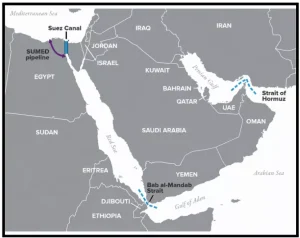
- Dangerous Shipping Routes: Disruptions in the Red Sea and threats to the Strait of Hormuz (a narrow water channel where 20% of the world’s oil passes) make shipping unsafe and expensive.
Why India Cannot Ignore This (The Ground Realities)
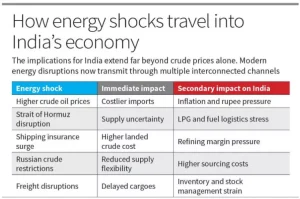
- Massive Import Needs: India imports nearly 90% of its crude oil. It is the world’s third-largest oil importer.
- Growing Demand: Unlike rich Western nations where oil use has plateaued, India’s oil needs are rising fast due to urbanization, industrialization, and expanding mobility.
- The Economic Domino Effect: When global oil prices go up, it immediately harms India’s economy:
- It increases the Current Account Deficit (India spends more foreign currency than it earns).
- It weakens the Indian Rupee.
- It drives up inflation (making food, travel, and everyday goods expensive).
- It increases government spending on fuel and fertilizer subsidies.
The Big Contradiction in Western Sanctions
The United States and Europe face a major paradox (contradiction) with their sanctions policy:
- Western Sanctions Dilemma: The United States and Europe want to reduce Russia’s oil revenues through sanctions, while also ensuring stable fuel prices, low inflation, and uninterrupted global energy supplies.
- Impact on Global Oil Markets: Restrictions on Russian oil exports reduce global supply, pushing crude oil prices higher and increasing fears of energy shortages.
- How Russia Still Benefits: Higher global oil prices can allow Russia to earn substantial revenues even by selling fewer barrels of oil, partly weakening the impact of sanctions.
- Implications for India: As a major oil-importing country, India faces rising energy costs and greater energy security concerns amid global supply uncertainties.
How Oil Security Has Changed in the 21st Century
In the past, energy security just meant owning or buying physical oil from a well. Today, global energy has become deeply entangled with Western-dominated financial and geopolitical architecture through:
- Insurance Controls: Forbidding Western companies from insuring ships that carry Russian oil priced above the cap.
- Logistical Barriers: Tanker blacklisting and shipping restrictions.
- Payment Blocks: Kicking Russia out of international banking systems like the Society for Worldwide Interbank Financial Telecommunication, making it hard for India to pay Russia in United States Dollars and forcing a shift to alternative payment mechanisms.
What This Means for India
- Loss of an “Economic Stabilizer”: Since 2022, discounted Russian oil acted as an economic cushion for India. It kept local fuel prices stable and improved refinery economics. Tighter United States rules mean India might lose this discount.
- High Risk in the Middle East: If India buys less from Russia, it must buy more from West Asia. This increases India’s strategic exposure to the Strait of Hormuz, a high-conflict zone where any supply delay could cause a domestic fuel crisis.
- Testing “Strategic Autonomy”: India has to walk a diplomatic tightrope. It must maintain a good relationship with the United States while firmly defending its right to secure affordable energy for its citizens. This approach reflects realism, not neutrality.
Way Forward
- Build Bigger Storage Tanks: India needs to quickly expand its Strategic Petroleum Reserves (emergency underground oil storage) to increase its backup fuel cushion.
- Find New Oil Partners: Diversify oil buying by creating deals with safer, non-sanctioned regions like Latin America (for example, Guyana and Brazil) and parts of Africa.
- Bypass Dangerous Waters: Look for alternative land routes and safer sea paths to avoid risky maritime chokepoints.
- Speed Up Clean Energy: Reduce the long-term need for hydrocarbons by moving faster toward renewable energy, solar power, Green Hydrogen, and Electric Vehicles.
- Boost Local Production: Increase India’s own domestic oil and gas drilling by reforming exploration frameworks like the Hydrocarbon Exploration and Licensing Policy and the Open Acreage Licensing Policy.
Click to Know UPSC Offline Courses
Conclusion
The tightening of restrictions on Russian oil highlights the growing link between geopolitics and energy security. For India, ensuring affordable and stable energy supplies will require greater diversification, stronger strategic reserves, and faster transition towards clean energy while maintaining strategic autonomy in global diplomacy.
 26 May 2026