Udaan, Prahaar, Q&A Bank etc.
CA Magazines & Editorials
 19 Dec 2024

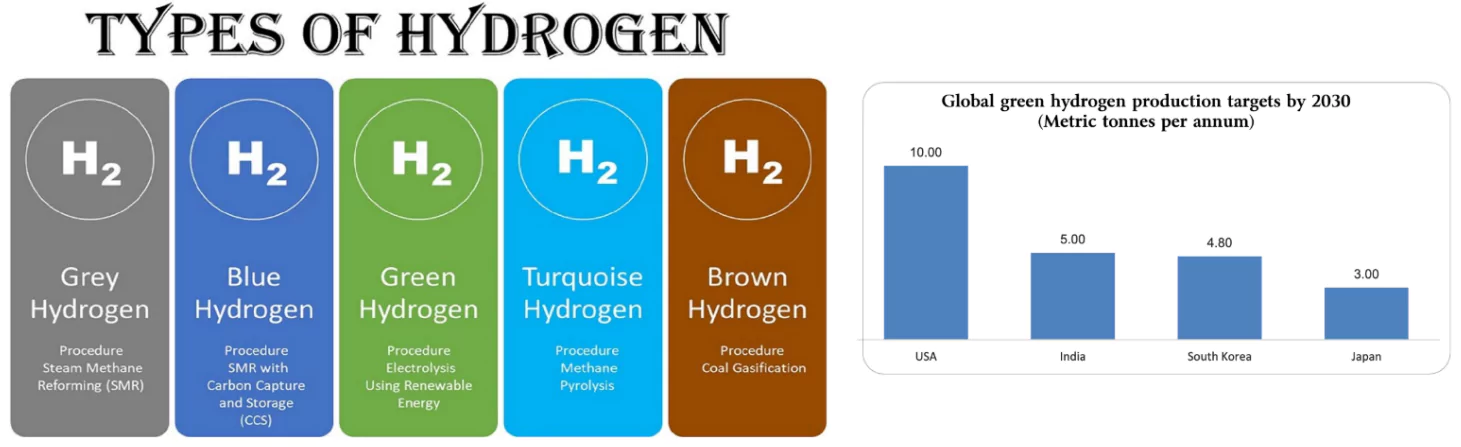
India targets 5 million metric tonnes (MMT) of green hydrogen production annually by 2030 to decarbonize industries and achieve net-zero emissions by 2070, but financing challenges pose significant hurdles.
About Green Hydrogen
How is Green Hydrogen Produced?
|
|---|
| Feature | Green Hydrogen | Coal | Natural Gas | Petroleum Products |
| Production | Electrolysis of water using renewable energy | Mining | Extraction from natural gas fields | Oil drilling and refining |
| Environmental Impact | Zero carbon emissions during production | High carbon emissions | Moderate carbon emissions | High carbon emissions |
| Cost | Currently more expensive than other fuels | Relatively inexpensive | More expensive than coal, but cheaper than green hydrogen | More expensive than coal and natural gas |
| Energy Density | High | Low | Medium | High |
| Storage and Transportation | Can be stored and transported in various ways, including pipelines and tanks | Can be stored in stockpiles | Can be stored in underground reservoirs and transported via pipelines | Can be stored in tanks and transported via pipelines and tankers |
Global Strategies for Green Hydrogen Financing and ProductionIncentive-Based Financing Models
Development of Hydrogen Hubs
International Partnerships and Trade Agreements
Blended and Innovative Financing Mechanisms
Carbon Pricing and Penalty Mechanisms
|
|---|
What is a Regulatory Sandbox (RS)?
|
|---|
Green hydrogen is a transformative solution to achieve India’s net-zero targets, decarbonize industries, and ensure energy independence. By addressing cost barriers, enhancing infrastructure, and leveraging global collaborations, India can emerge as a leader in the global green hydrogen economy.


Connect with our experts to get free counselling & start preparing
Join India’s trusted platform for expert guidance, quality content, proven success.
Learn anytime, anywhere.



India's leading UPSC coaching platform helping aspirants prepare for IAS, IPS, IFS and other Civil Services examinations with the best faculty and proven strategies.
<div class="new-fform">
</div>