News in Shorts: 10 March 2025

10 Mar 2025

News in Shorts: 10 March 2025

UNESCO’s TWAS Award

Context: The TWAS Award 2026 in Engineering and Computer Sciences by UNESCO has been awarded by Suman Chakraborty.

  • Diagnostic Solutions: The award is presented to honour his body of work constituting affordable, simple-to-execute, and innovative diagnostic solutions covering various medical challenges such as anaemia, cancer, COVID-19, tuberculosis etc.

About Professor Chakraborty

  • Professor Chakraborty is currently a J.C. Bose National Fellow and is the institute chair professor for Mechanical Engineering department at Indian Institute of Technology, Kharagpur (IIT-KGP).
  • Notable Innovations:
    • Oroscreen: It is a torch-like imaging device for the early detection of oral cancer
    • Covirap: It is a rapid COVID-19 detection test kit. It has been granted a U.S. patent for its rapid nucleic acid testing technology using DNA RNA samples. 
    • PrepapQR: It is a home test for women to accurately test vaginal Ph with the help of a strip
    • HemoQR: It is a simplified anaemia screening technology currently available commercially.
    • Currently developing a flagship technology for rapid detection of tuberculosis.

UNESCO’s TWAS (The World Academy of Sciences) Award

  • It was established in 1985 by TWAS to recognize excellence in scientific research in the global South.
  • Awarded By: UNESCO
  • It is a biennial award (every two years)
  • Eligibility: The award is given to individual scientists from developing countries who have been working and living there for at least 10 years.
  • Criteria: Outstanding contribution to scientific knowledge in nine fields of sciences or the application of science and technology to sustainable development is considered criteria.
  • Fields: Agricultural Sciences, Biology, Chemistry, Earth, Astronomy and Space Sciences, Engineering Sciences, Mathematics, Medical Sciences, Physics, and Social Sciences.


T-72 Tank

Context: The Ministry of Defence has signed a $248 million contract with Russian defence firm Rosoboronexport (RoE).

Key Highlights of the Contract

  • The deal involves procuring 1,000-horsepower (HP) engines for T-72 battle tanks.
  • Technology Transfer to Boost ‘Make in India’
    • The contract includes Transfer of Technology (ToT) to India.
    • Chennai-based Armoured Vehicles Nigam Limited (Heavy Vehicle Factory) will handle integration and production.
    • This initiative supports ‘Make in India’ in the defence sector.

About T-72 tank

  • The T-72 is a Soviet-era main battle tank that went into production in 1973.
    • It is the most widely used main battle tank in the world.
  • It was developed using ideas from the T-64 tank and the earlier Object 167M design.
  • Features:
    • Mobility: upgraded with 1,000 HP engines which helps to improve speed and maneuverability. 
    • Fire power: equipped with 125mm smoothbore gun, 7.62mm coaxial machine gun, and a 12.7mm anti-aircraft gun. 
    • Operational range: can travel upto 500 km on road. 
      • It has a fuel capacity of around 1,200 liters. 
  • Benefits:
    • Upgrading to 1,000 HP engines will improve:
      • Mobility on the battlefield.
      • Offensive capabilities of the Army.


Koch-Rajbongshis

Context: The Koch-Rajbongshis, one of the largest communities in western Assam and northern West Bengal, have been demanding Scheduled Tribe (ST) status for decades.

Who are the Koch-Rajbongshis?

  • The Koch-Rajbongshis, also known as Rajbanshi or Rajbongshi, are a community spread across:
    • India – Lower Assam, North Bengal, and eastern Bihar.
    • Nepal – Terai region.
    • Bangladesh – Rangpur division and parts of North Bangladesh.
    • Bhutan.
  • They have historically associated themselves with the Koch dynasty.
  • The word “Rajbongshi” literally means “royal community”. 
  • They have a rich cultural heritage and their own language.
    • Language: They speak Rajbongshi/Rajbanshi language.
      • Other names of the language are Kamtapuri, Rajbangsi, Rajbansi, Rajbongshi, Goalpariya and Tajpuri.
    • Religion: Originally, they practiced animism. later, followed Hinduism (Sanatana Dharma).
      • A small section practiced Christianity.
  • Rejections and Temporary ST Status
    • The Registrar General of India (RGI) rejected the ST demand for these six communities eight times between 1981 and 2006.
      • Six communities are: Adivasis, Ahoms, Chutias, Mataks, and Morans along with them. 
    • In 1996, the Centre granted ST status to the Koch-Rajbongshis for six months.
      • This decision was revoked after protests when they occupied a majority of reserved seats in medical and engineering courses.


Vanuatu

Context: Vanuatu has decided to cancel the passport granted to former Indian Premier League (IPL) chairman Lalit Modi, who has been described as an economic offender by Indian investigating agencies.
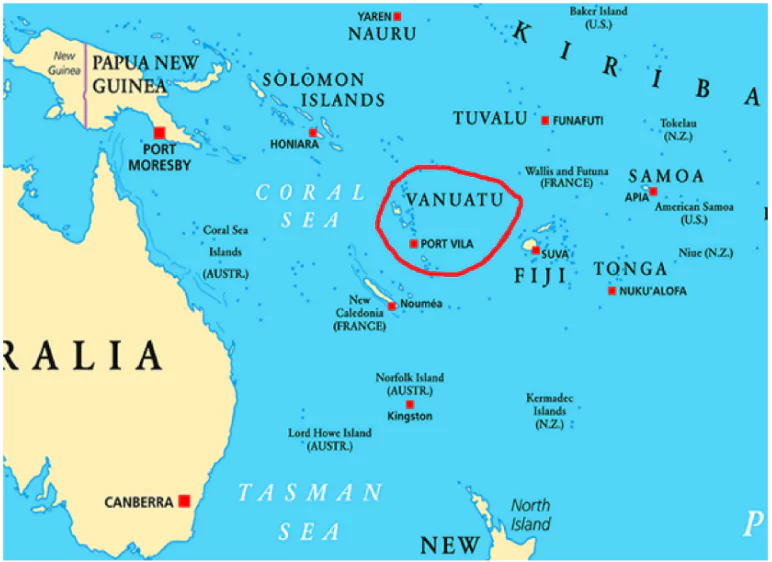
  • He has obtained Vanuatu citizenship through its Citizenship by Investment (CBI) program.

Vanuatu

Vanuatu’s Citizenship by Investment (CBI) Program

  • Allows wealthy individuals to purchase citizenship by making a financial investment.
  • Offers visa-free or visa-on-arrival access to many countries, making it attractive for global fugitives and investors.

About Vanuatu

  • Location: A South Pacific nation east of Australia and north of New Zealand.
  • Composition: 83 volcanic islands, with 65 inhabited.
  • Capital & Largest City: Port Vila, located on Efate Island (900 sq km).


Hantavirus

Context: Betsy Arakawa, wife of Oscar-winning actor Gene Hackman has died from a respiratory illness linked to hantavirus.

About Hantavirus

  • Hantavirus is a group of viruses primarily transmitted to humans through contact with certain rodents, such as deer mice, white-footed mice, rice rats, and cotton rats.
  • Hantavirus was first identified during the Korean War in the early 1950s.
  • The virus was named Hantaan, in recognition of the Hantaan river, which flows through Korea.
  • The virus can cause severe respiratory and hemorrhagic diseases in humans, with high mortality rates in some cases.

Transmission of Hantavirus

  • Rodent Contact: Inhalation of aerosolized particles from rodent excreta is the primary mode of transmission.
  • Human-to-Human Transmission: Some strains from Argentina and Chile, like the Andes virus (ANDV), have been reported to spread between people, though this is uncommon.

Hantavirus can cause two major illnesses

  • Hantavirus Pulmonary Syndrome (HPS)
    • Found mainly in the Americas
    • Symptoms: Fever, muscle aches, fatigue, Severe respiratory distress and organ failure
  • Hemorrhagic Fever with Renal Syndrome (HFRS)
    • Found mainly in Asia and Europe
    • Initial symptoms: High fever, headache, back pain, Low blood pressure, acute kidney failure.

Who is at risk from Hantavirus?

  • Farmers, construction workers, and those cleaning unused spaces
  • Campers and hikers who come into contact with rodent nests
  • Homeowners dealing with rodent infestations
  • Children under five, pregnant women, and immunocompromised individuals

Diagnosis and Treatment

  • Treatment: There is no specific antiviral treatment or vaccine for hantavirus infections. 
    • Management primarily focuses on early detection, supportive care, and symptomatic treatment to improve survival chances.


Pashu Aushadhi Kendras

Context: The government is planning to open “Pashu Aushadhi” stores across the country to provide affordable generic veterinary medicines to people engaged in animal husbandry and dairying.


  • The Department of Animal Husbandry & Dairying will soon release guidelines for the functioning of these stores

About Pashu Aushadhi Initiative

  • It is a part of the revised Livestock Health and Disease Control Programme (LHDCP)
    • LHDCP has an overall outlay of Rs 3,880 crore for the years 2024-25 and 2025-26.
  • It aims to provide good quality and affordable generic veterinary medicine and incentive for sale of medicines available to people engaged in animal husbandry and dairying.
  • Operated By: The Pashu Aushadhi stores will be run by cooperative societies and Pradhan Mantri Kisan Samriddhi Kendras (PMKSK)
  • Ethnoveterinary Medicines: The Pashu Aushadhi Kendras will also sell ethnoveterinary medicines, based on traditional beliefs and indigenous knowledge and practices, to treat animal diseases.
    • The National Dairy Development Board (NDDB) has compiled a list of ethnoveterinary formulations for the treatment of mastitis, FMD mouth lesions, FMD foot lesions/ wounds, fever, diarrhoea, bloating and indigestion, and worm.
  • Need: India’s Livestock population stood at 535.78 million in 2019 as per the 20th Livestock Census with total bovine population (including cattle, buffalo, mithun and yak) of 302.79 million.
    • Livestock Diseases: They are impacted adversely due to diseases like Foot and Mouth Disease (FMD), Brucellosis, Peste des Petits Ruminants (PPR), Cerebrospinal Fluid (CSF), Lumpy Skin Disease, etc.”
News in Shorts: 10 March 2025

Explore UPSC Foundation Course

Need help preparing for UPSC or State PSCs?

Connect with our experts to get free counselling & start preparing

Aiming for UPSC?

Download Our App

      
Quick Revise Now !
AVAILABLE FOR DOWNLOAD SOON
UDAAN PRELIMS WALLAH
Comprehensive coverage with a concise format
Integration of PYQ within the booklet
Designed as per recent trends of Prelims questions
हिंदी में भी उपलब्ध
Quick Revise Now !
UDAAN PRELIMS WALLAH
Comprehensive coverage with a concise format
Integration of PYQ within the booklet
Designed as per recent trends of Prelims questions
हिंदी में भी उपलब्ध

<div class="new-fform">


    </div>

    Subscribe our Newsletter
    Sign up now for our exclusive newsletter and be the first to know about our latest Initiatives, Quality Content, and much more.
    *Promise! We won't spam you.
    Yes! I want to Subscribe.