Subject: GS 2: International Relations
Context: The Indian Prime Minister is undertaking a Central Asia tour, beginning with a state visit to Uzbekistan and followed by the Shanghai Cooperation Organisation (SCO) Heads of State summit in Bishkek, Kyrgyzstan.
UPSC Course Fees Online
About Central Asia
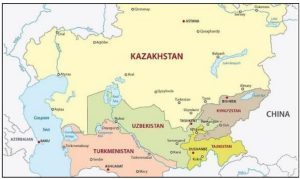
- Geography: Central Asia is a landlocked region between Russia and China, comprising Kazakhstan, Kyrgyzstan, Tajikistan, Turkmenistan and Uzbekistan.
- Strategic Location: Situated at the heart of Eurasia, it connects Europe, Russia, China, South Asia and West Asia, giving it major geopolitical and connectivity significance.
- Security Challenges: Terrorism, radicalisation, Afghanistan-related instability, border disputes and water-sharing conflicts remain key regional concerns.
- Geopolitical Shift: While Russia retains historical influence, China’s economic footprint is expanding, alongside growing engagement by Türkiye, Iran, the United States and the European Union.
- Resource Significance: The region possesses substantial hydrocarbon, uranium and critical mineral resources, making it relevant to India’s energy and strategic-resource security.
Why Uzbekistan Matters:
- Strategic Partner: Uzbekistan is among the region’s more dynamic economies and is pursuing a policy of diversifying its external partnerships.
- Counter-Terrorism: Its firm opposition to terrorism and extremism complements India’s security interests.
- Afghanistan: Uzbekistan’s geographical proximity and practical understanding of Afghanistan make it important for India’s regional security calculations.
- Connectivity: Cooperation can support exploration of alternative rail and road routes through Iran and Afghanistan, reducing India’s dependence on routes constrained by Pakistan.
- Economic Potential: India can expand cooperation with Uzbekistan in pharmaceuticals, digital technology, agriculture, education, healthcare and investment.
|
India–Central Asia Relations
- Civilisational Links: India shares centuries-old connections with Central Asia through trade, culture, language, religion, Buddhism, Sufism and architecture.
- Continental Neighbourhood: Central Asia forms an important part of India’s extended continental neighbourhood, despite the absence of direct overland access.
- 2015 Breakthrough: The Indian Prime Minister’s visit to all five Central Asian republics marked a major shift towards more proactive and independent Indian engagement with the region.
- Institutional Mechanism: The India-Central Asia Dialogue was established to provide a high-level framework for cooperation in areas such as security, trade, connectivity, culture and development.
- Strategic Objective: India seeks to strengthen ties in trade, defence, energy, critical minerals, technology, education, healthcare and tourism, while supporting a balanced regional order.
Why Central Asia Matters for India
- Geostrategic Significance: Central Asia’s proximity to India, separated geographically by the Wakhan Corridor in Afghanistan, makes regional stability important for India’s northern security environment.
- The India–Central Asia Dialogue is a Foreign Ministers-level platform between India and the five Central Asian Republics: Kazakhstan, Kyrgyzstan, Tajikistan, Turkmenistan and Uzbekistan. It was launched in January 2019 at Samarkand, Uzbekistan, to institutionalise India’s engagement with Central Asia.
|
- Counter-Terrorism: Central Asian countries maintain a strong stance against religious extremism and terrorism, aligning with India’s security priorities.
- Afghanistan Factor: Instability, terrorism, drug trafficking and extremist networks emanating from Afghanistan have implications for both Central Asia and India.
- Energy Security: Kazakhstan’s uranium supplies are particularly significant for India’s civil nuclear energy programme, while the wider region offers opportunities in hydrocarbons and critical minerals.
- TAPI Pipeline: TAPI (Turkmenistan–Afghanistan–Pakistan–India) gas pipeline, designed to transport natural gas from Turkmenistan’s Galkynysh gas field to South Asia.
- Strategic importance: Strengthens India’s energy security, provides access to Central Asian gas and promotes regional connectivity.
- Geopolitical Balancing: Greater engagement enables India to contribute to a multipolar Eurasian order as Russian influence evolves and Chinese economic presence expands.
- Soft Power: India’s experience in democracy, pluralism, education, healthcare, pharmaceuticals and information technology provides avenues for deeper people-to-people engagement.
India and Shanghai Cooperation Organisation
- Evolution: The SCO originated as the Shanghai Five in 1996 and subsequently evolved into the Shanghai Cooperation Organisation.
- India’s Membership: India became a full member in 2017, alongside Pakistan.
- Strategic Significance: The SCO provides India with a platform to engage simultaneously with Russia, China and the Central Asian republics.
- India’s Approach: India’s SCO engagement is driven primarily by geography and strategic interests, rather than ideological alignment.
- Security Cooperation: The organisation provides avenues for cooperation against terrorism, separatism and extremism, including through its Regional Anti-Terrorist Structure (RATS).
- Broader Agenda: India advocates cooperation in security, connectivity, economic development, technology and civilisational exchanges.
IAS coaching
Key Challenges for India
- Connectivity Deficit: Lack of direct overland access, particularly due to Pakistan’s geographical position, raises transport costs and logistical complexity and constrains India-Central Asia trade.
- Chinese Dominance: China’s extensive trade, infrastructure investments and BRI projects give it a substantial economic advantage in the region.
- Afghanistan Instability: Political instability, terrorism, extremist networks and drug trafficking in Afghanistan pose persistent regional security challenges.
- Limited Trade: Despite significant potential, India-Central Asia trade remains modest, reflecting connectivity, financial and logistical constraints.
- India’s trade with Central Asia remains modest at around US$2 billion annually, despite significant economic potential, due to connectivity, financial and logistical constraints.
- Regional Disputes: Border, ethnic and water-sharing disputes, particularly involving the Amu Darya and Syr Darya basins, hinder regional integration.
- Competing Influences: India must navigate the overlapping influence of Russia, China, Türkiye, Iran, the United States and the European Union.
Way Forward
- Operationalise Connectivity Corridors: Accelerate the effective use of Chabahar Port, INSTC and other multimodal routes to improve India’s physical access.
- Critical Mineral Partnerships: Develop joint ventures and public-private partnerships for exploration, extraction and processing of critical minerals.
- Deepen Security Cooperation: Expand counter-terrorism exercises, intelligence sharing and cooperation through SCO-RATS.
- Strengthening Connectivity:
- Chabahar Port: Utilise Iran’s Chabahar Port as a gateway to Afghanistan and Central Asia.
- INSTC: Accelerate the International North-South Transport Corridor (INSTC) to create a multimodal link between India, Iran, Central Asia, Russia and Europe.
- Diversified Corridors: Develop rail, road, maritime and air connectivity to reduce logistics costs and overcome geographical constraints.
- Strengthen Economic Engagement: Promote Indian investments in pharmaceuticals, information technology, agriculture, energy and infrastructure.
- Expand Digital Connectivity: Leverage India’s Digital Public Infrastructure and digital solutions in payments, healthcare and governance.
- Enhance People-to-people Ties: Expand education, scholarships, medical tourism, tourism, cultural exchanges and technical training.
- Proactive Diplomacy: Convert India’s civilisational goodwill into sustained economic, technological and strategic partnerships.
Click to Explore UPSC Offline Coaching
Conclusion
India’s return to Central Asia represents a shift from historical affinity to strategic partnership. Converting civilisational goodwill into connectivity, economic integration, energy partnerships and security cooperation can help India emerge as a credible and trusted partner in the evolving Eurasian order.
 29 Aug 2026