Operation Southern Readiness 26-2
Context: The Indian Navy hosted Operation Southern Readiness 26-2, a multinational maritime training engagement, at Southern Naval Command, Kochi, Kerala.
UPSC Online Courses
About Operation Southern Readiness 26-2
- It is the second multinational maritime training exercise hosted by the Indian Navy at the Southern Naval Command, Kochi, to enhance professional maritime training and regional maritime cooperation.
- The first Operation Southern Readiness was held in 2022, in the western Indian Ocean ,Seychelles.
- Objective: To strengthen regional capacity building, enhance interoperability among partner navies, promote the exchange of best practices, and improve collective maritime security through coordinated training and operational collaboration.
- Partner Body: The exercise is conducted in partnership with the Combined Maritime Forces (CMF) under the aegis of Combined Task Force 154 (CTF 154), the Indian Navy-led CMF Training Task Force.
- CMF is a multinational maritime partnership comprising 47 countries committed to promoting maritime security and stability.
PARIVARTAN Scheme
Context: The Ministry of Housing and Urban Affairs (MoHUA) has approved the operational guidelines for the PARIVARTAN Scheme to reduce vehicular pollution in Delhi-NCR.
About PARIVARTAN Scheme
- PARIVARTAN (Programme for Accelerated Renewal and Incentivization of Vehicle Assets for Reducing Transport Air Pollution and Network Emissions) is a Central Government scheme to replace old, highly polluting trucks and buses in the National Capital Region (NCR) with Bharat Stage (BS)-VI compliant or electric vehicles.
- Budget: Rs. 9,585 crore total, with Rs. 5,041 crore in central support.
- Objective: To reduce vehicular emissions, improve air quality in Delhi-NCR, promote cleaner mobility, and accelerate the transition to environmentally sustainable commercial transport.
- Implementing Ministry: The scheme is implemented by the Ministry of Road Transport and Highways (MoRTH) and funded through the National Capital Region Planning Board (NCRPB).
- Coverage: The scheme covers the National Capital Region (NCR), with Delhi, Haryana, Rajasthan and Uttar Pradesh providing 10-year motor vehicle tax concessions and registration fee waivers for eligible replacement vehicles.
- Eligible beneficiaries receive
- Motor vehicle tax concessions
- Registration fee waivers
- 5% interest subvention on vehicle loans,
- Minimum 8% Original Equipment Manufacturer (OEM) discount
- Monthly fuel vouchers for eligible diesel/CNG replacement vehicles
- One-time financial assistance for electric replacement vehicles and Certificate of Deposit (CoD) trading.
- Implementation Mechanism: The scheme will be delivered through an integrated digital platform linked with VAHAN, V-Scrap, DigiELV, the Public Financial Management System (PFMS), participating lenders, and fuel voucher systems to ensure transparent and end-to-end digital implementation.
AI Squatting
Context: Cybersecurity researchers have warned that AI Squatting is emerging as a new cyber threat that exploits AI-generated hallucinations to spread phishing attacks and malware.
About AI Squatting
- AI Squatting is a cyberattack technique in which attackers register fake websites, software packages or digital assets that Large Language Models (LLMs) are likely to hallucinate, allowing users to be redirected to malicious resources through AI-generated recommendations.
- Multiple Attack Forms: It includes Phantom Squatting, which targets hallucinated internet domains, and HalluSquatting, which exploits hallucinated software packages and repositories.
- AI Hallucination is an AI behaviour where a model generates incorrect, fabricated or non-existent information.
- Key Features
- Exploits Predictable AI Errors: Attackers leverage recurring hallucinations generated by AI models rather than human typing mistakes or software vulnerabilities.
- Targets User Trust: Victims voluntarily access malicious websites or install malware because the links or package names are recommended by trusted AI assistants.
- Difficult to Eliminate: Since hallucinations arise from the probabilistic nature of LLMs, the threat cannot be fully removed through conventional software patches.
- Implications
- Cybersecurity Risks: AI Squatting can facilitate phishing, credential theft, malware distribution and software supply-chain attacks.
- Enterprise Security: Organisations using AI assistants for coding, IT operations and automation face increased risks of introducing malicious code into their systems.
- Need for Verification: AI-generated links, domains, repositories and software packages require independent verification before use.
- Policy Challenge: The threat highlights the need for AI governance, secure AI deployment practices and stronger cybersecurity frameworks.
- Other Related Attacks:
- Typosquatting: A cyberattack in which attackers register misspelled versions of legitimate website domain names to deceive users into visiting fraudulent websites for phishing, malware distribution or credential theft.
- Brand Squatting: A cyberattack in which attackers register domains, websites or digital assets resembling well-known brands or trademarks to impersonate legitimate organisations and mislead users.
- Package Squatting: A cyberattack in which attackers publish malicious software packages with names similar to legitimate libraries or repositories, tricking developers into downloading and executing harmful code
“STEP UP” Report on India’s Food Processing Industry
Context: Deloitte India and FICCI jointly released the “STEP UP” Report at the FoodWorld India 2026 conference, highlighting India’s food processing growth potential.
- The report projects that India’s processed food market could reach US$600 billion by 2030, driven by value addition, technology adoption and changing consumer demand.
Key Factors Supporting India’s Food Processing Industry
- Changing Consumer Demand: Rising urbanisation, higher disposable incomes and increasing health awareness are driving demand for safe, nutritious, premium and ready-to-eat food products.
- Rapid growth in functional and nutrition-based foods reflects the shift towards value-added consumption.
- Technology and Digital Transformation: Adoption of Generative AI is accelerating product development, demand forecasting, smart manufacturing and supply-chain efficiency.
- E-commerce and quick-commerce platforms have emerged as major channels for digital-first food product launches.
- Policy and Export Ecosystem: Government initiatives are promoting regulatory simplification, infrastructure development and global branding to strengthen India’s food processing ecosystem.
- Greater emphasis on value-added food exports is improving competitiveness in international markets.
Potential of India’s Food Processing Industry
- Large Domestic Market Opportunity: Processed food market projected to reach USD 560–580 billion by 2030; broader food processing sector to touch USD 600 billion.
- Significant Value Addition: India currently processes only 12–13% of its agricultural output, indicating substantial scope for expanding food processing and reducing post-harvest losses.
- Strong Export Potential: Increasing exports of processed and branded food products, instead of raw agricultural commodities, can generate 3–5 times higher export value, strengthening farmers’ incomes and India’s global market presence.
UPSC Online Classes
About FoodWorld India 2026
- FoodWorld India 2026 was the 17th edition of FICCI’s flagship convention for the food processing and food business sector, bringing together policymakers, industry leaders, startups and researchers.
- Theme: “STEP UP – Scalable Transformation for Efficiency and Profitability to Unleash Progress”, focusing on building a competitive and value-driven food processing ecosystem.
MH-60R Seahawk Helicopter
Context: Recently, the US has announced that the MH-60R Seahawk helicopter has been delivered to the Indian Navy at Kochi.
About MH-60R Seahawk
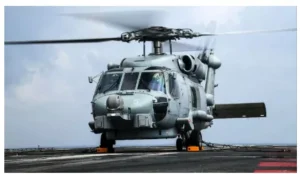
- A maritime multi-role helicopter, variant of the Black Hawk, manufactured by Lockheed Martin.
- All-weather platform equipped with advanced avionics and sensors for anti-submarine warfare (ASW) and anti-surface warfare (ASuW).
- Capable of operations from ships and shore bases; enhances maritime domain awareness.
- The helicopter comes equipped with a range of sensors, including a multi-mode radar, electronic support measures system, electro-optical/infrared camera, datalinks, aircraft survivability systems, dipping sonar, and sonobuoys.
Exercise Pitch Black 2026
Context: Indian Air Force contingent arrived in Australia to participate in Exercise Pitch Black 2026.
About Exercise Pitch Black
- A biennial, multinational large-force employment air combat exercise hosted by the Royal Australian Air Force (RAAF).
- Involves air forces from the Indo-Pacific and Europe, simulating complex, realistic air combat scenarios.
- Focus Areas: interoperability, combat flying skills, professional military ties, and long-term strategic partnerships.
- Location: RAAF bases at Darwin, Tindal, and Amberley in northern Australia.
- Participants:
-
- The 2026 edition features active forces and military personnel from 20 nations.
Click to Know UPSC Coaching Centres in India
Significance for India
- Enhances IAF’s operational exposure to multinational, high-intensity air combat training alongside advanced air forces.
- Reflects India’s growing engagement in Indo-Pacific security architecture, alongside platforms like the Quad
 18 Jul 2026