UPSC PYQs

Prelims, Mains & Optional PYQs

UPSC Notes

Comprehensive & Short Notes

Corporate Ethics: Importance, Principles, Governance & Banking Challenges

18 Jul 2026

Corporate Ethics: Importance, Principles, Governance & Banking Challenges

GS Paper 4: Ethics, Integrity & Aptitude

Context: The resignation of former HDFC Bank Chairman Atanu Chakraborty over ethical concerns, amid reports of an internal vigilance probe into alleged irregular payments, has revived debate on corporate ethics, corporate governance, fiduciary responsibility, and internal controls in India’s banking sector.
UPSC Course Fees Online

What is Corporate Ethics?

  • Corporate ethics refers to the moral principles, values and standards that guide the behaviour of a company, its board, management and employees in conducting business responsibly.
  • It goes beyond legal compliance, ensuring that decisions are: Honest, Transparent, Fair, Accountable, Responsible towards stakeholders.

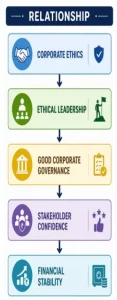
Corporate Ethics

Core Principles of Corporate Ethics

Principle Meaning
Integrity Truthfulness in business decisions
Transparency Timely and truthful disclosures
Accountability Responsibility for actions
Fairness Equal treatment of stakeholders
Responsibility Long-term sustainability over short-term gains
Compliance Adherence to laws and regulations
Respect Protection of employees, customers and society

Why Corporate Ethics Matters?

  • Builds Investor Confidence: Ethical governance attracts long-term domestic and foreign investment by reducing uncertainty. 
    • Example: After the Satyam Scam (2009), SEBI strengthened corporate governance norms, restoring investor confidence in Indian markets.
  • Reduces Financial Frauds: Strong ethical standards and internal controls minimize fraud, corruption, and financial manipulation. 
    • Example: The Punjab National Bank (PNB) fraud (₹13,000+ crore, 2018) highlighted the enormous cost of ethical failures.
  • Enhances Public Trust: Ethical conduct builds confidence among customers, employees, investors, and society. 
    • Example: Tata Group is consistently regarded as India’s most trusted corporate brand due to its ethical business culture.
  • Corporate EthicsEncourages Corporate Social Responsibility (CSR): Ethical firms invest in education, healthcare, and environmental protection. 
    • India mandates CSR spending under Section 135 of the Companies Act, 2013, making it one of the first countries with mandatory CSR.
  • Reduces Reputational Risks: A single ethical lapse can destroy decades of goodwill.
    • Example: The Yes Bank crisis (2020) significantly eroded public confidence due to governance failures.
  • Supports Environmental Sustainability: Responsible businesses reduce pollution, adopt green technologies, and contribute to climate goals. 
    • Example: Indian companies increasingly disclose ESG performance under SEBI’s BRSR framework.
  • Improves Global Reputation: Countries and institutions with strong ethical standards attract greater investment and international partnerships. 
    • Example: India’s emphasis on ESG disclosures through Business Responsibility and Sustainability Reporting (BRSR) aligns Indian corporates with global governance standards.
  • Enhances Operational Efficiency: Ethical workplaces foster trust, employee commitment, and better decision-making, leading to higher productivity and reduced operational risks.

Corporate Governance and Corporate Ethics: Connecting the Dots

Corporate Governance Corporate Ethics
Framework of rules and institutions Moral foundation of decision-making
Focuses on accountability Focuses on integrity
Ensures legal compliance Ensures ethical conduct
Driven by Boards and regulators Driven by organisational culture
External oversight Internal conscience

Are Corporate Governance and Corporate Ethics the Same?

No.

Corporate Governance Corporate Ethics
“How” a company is governed “Why” decisions are taken
Legal framework Moral framework
Mandatory Voluntary (often beyond law)
Prevents misuse of power Prevents misuse of conscience

Good governance without ethics becomes procedural compliance.
Good ethics without governance lacks institutional enforcement.

Lessons from the HDFC Bank Episode

  • The reported events raise important governance concerns:
    • Ethical Issues
      • Alleged masking of financial transactions.
      • Possible conflict between business targets and ethical conduct.
      • Weak internal accountability.
      • Failure of transparent disclosures.
      • Questions regarding tone at the top.
    • Governance Issues
      • Internal audit detected irregularities.
      • The Audit Committee initiated a vigilance investigation.
      • Internal control mechanisms became operational.
      • Importance of Board oversight highlighted.
      • RBI publicly stated that it had no material governance concerns based on its supervisory assessment, underscoring the distinction between ongoing internal investigations and regulatory findings.

UPSC Online Coaching

Challenges to Ethical Governance in Banking

  • Commercial Pressure: Intense pressure to achieve aggressive profit, loan growth and market share targets may encourage employees to compromise due diligence, overlook compliance requirements or engage in mis-selling practices, increasing the risk of fraud and financial instability.
  • Conflict of Interest: Incentive structures linked to sales, bonuses or short-term profitability may influence decision-making, causing officials to prioritize personal or institutional gains over customers’ interests, fiduciary responsibilities and long-term financial sustainability.
  • Weak Ethical Culture: A workplace culture that rewards results without equal emphasis on integrity can normalize unethical behaviour, discourage ethical decision-making and gradually erode accountability, transparency and public confidence in banking institutions.
  • Information Asymmetry: Inadequate disclosure, selective reporting or withholding of critical information from boards and regulators weakens oversight, delays corrective action and increases the likelihood of governance failures, financial irregularities and systemic risks.
  • Regulatory Arbitrage: Banks may exploit legal ambiguities, jurisdictional differences or regulatory loopholes to bypass prudential norms, undermining the spirit of financial regulation and creating unfair competitive advantages along with heightened systemic vulnerabilities.
  • Whistle-blower Concerns: Employees often hesitate to report unethical practices due to fear of retaliation, career setbacks or workplace harassment, allowing misconduct to persist unchecked and weakening institutional accountability and internal governance mechanisms.
  • Reputational Risks: Even unproven allegations of misconduct can severely damage a bank’s credibility, reduce depositor and investor confidence, trigger regulatory scrutiny and adversely affect financial stability, customer relationships and long-term business sustainability.

Way Forward

  • Strengthen Board Independence: Ensure a majority of independent directors with diverse expertise to provide objective oversight, reduce conflicts of interest, and safeguard stakeholder interests. 
    • Independent boards improve accountability, strengthen strategic decision-making, and enhance investor confidence in corporate governance.
  • Empower Audit Committees: Constitute independent and professionally competent audit committees with adequate authority to oversee financial reporting, internal controls, risk management, and compliance. 
    • Strong audit committees enhance transparency, detect irregularities early, and reinforce ethical financial practices.
  • Foster an Ethics-First Organisational Culture: Promote integrity through ethical leadership, clear codes of conduct, transparent communication, and zero tolerance for misconduct across all levels of the organisation. 
    • A value-driven culture encourages responsible decision-making and strengthens long-term institutional credibility.
  • Robust Whistle-blower Protection: Establish confidential reporting mechanisms with strong legal and organisational safeguards against retaliation to encourage employees to report unethical practices without fear. 
    • Effective whistle-blower systems help detect fraud early and promote a culture of accountability and transparency.
  • Periodic Ethics Audits: Conduct regular independent ethics audits to assess compliance with ethical standards, governance frameworks, and organisational values while identifying emerging risks and corrective measures.
    • Continuous evaluation strengthens institutional integrity and improves stakeholder trust.
  • Link Executive Remuneration to ESG and Governance Performance: Align executive compensation with environmental, social, governance (ESG), ethical conduct, and long-term value creation instead of only short-term financial targets. 
    • Such incentives discourage excessive risk-taking and promote responsible corporate leadership.
  • Greater Disclosure of Related-Party and Exceptional Transactions: Mandate timely and comprehensive disclosure of related-party dealings, exceptional financial transactions, and material risks to improve transparency and prevent conflicts of interest.
    • Enhanced disclosure enables informed decision-making by shareholders, regulators, and investors.
  • Continuous Ethics Training for Senior Management: Provide regular ethics, compliance, and governance training to directors and senior executives to strengthen awareness of evolving regulations, emerging risks, and ethical decision-making frameworks. 
    • Ongoing capacity building reinforces responsible leadership and institutional resilience.

Click to Know UPSC Offline Courses

Conclusion

The HDFC Bank episode illustrates that strong institutions require both robust governance structures and an ethical organisational culture. While regulatory oversight and internal controls are indispensable, lasting trust in the banking system depends on leadership that prioritises integrity over expediency.

Check Out UPSC CSE Books

Visit PW Store

online store 1

Corporate Ethics: Importance, Principles, Governance & Banking Challenges

Explore UPSC Foundation Batches

Need help preparing for UPSC or State PSCs?

Connect with our experts to get free counselling & start preparing

Free Counselling for UPSC Aspirants

Connect with our experts and take the right next step.

Expert Guidance
Personalized Strategy
100% Free

Book Your Free Session

NEED ASSISTANCE?

Request a Callback

Our counsellor will connect with you and help you choose the right course and centre.

  • Expert Guidance
  • Course & Fee Information
  • Quick Callback Support

Request a Callback

Books
UPSC PYQs
UPSC Notes
Current Affairs
Quick Revise Now !
AVAILABLE FOR DOWNLOAD SOON
UDAAN PRELIMS WALLAH
Comprehensive coverage with a concise format
Integration of PYQ within the booklet
Designed as per recent trends of Prelims questions
हिंदी में भी उपलब्ध
Quick Revise Now !
UDAAN PRELIMS WALLAH
Comprehensive coverage with a concise format
Integration of PYQ within the booklet
Designed as per recent trends of Prelims questions
हिंदी में भी उपलब्ध

<div class="new-fform">


    </div>

    Subscribe our Newsletter
    Sign up now for our exclusive newsletter and be the first to know about our latest Initiatives, Quality Content, and much more.
    *Promise! We won't spam you.
    Yes! I want to Subscribe.