Sowa-Rigpa
Context: Recently, the 2nd governing body meeting of the National Institute of Sowa-Rigpa was held in New Delhi.
- The Governing Body outlined a strategic roadmap to strengthen the National Institute of Sowa-Rigpa as a leading centre for education, research and healthcare, and expansion across the Indian Himalayan Region.
UPSC Online Courses
About Sowa- Rigpa
- It is a system of medicine that is one of the oldest medical traditions across the world.
- It is popularly known as the Amchi system of medicine.
- It has been recognised by the Government of India under the Ayush framework.
- Meaning: The term Sowa-Rigpa means ‘Knowledge of Healing’ and derives its meaning from the Bhoti Language.
- Region: It is widely practiced in the Trans-Himalayan region, particularly in Ladakh, Himachal Pradesh (Spiti and Lahaul), Jammu & Kashmir,West Bengal (Darjeeling), Arunachal Pradesh and Sikkim.
- It is also practiced in some parts of China, the Himalayan regions of India, Mongolia, Nepal, Russia, and Bhutan.
- Core Principle: It emphasises maintaining a balance among the three bodily energies (Nespa), Lung (wind), Tripa (bile) and Beken (phlegm).
- Similarity to Ayurveda: It is closely related to Ayurvedic philosophy, with over 75% of its practices derived from the Ashtanga Hridaya, a classical Ayurvedic text.
- Many medicines of Indian-origin such as Ashwagandha, Guggulu, Triphala, Ashok, Haridra, etc. are used in the Sowa-Rigpa system for treatment purposes.
About National Institute of Sowa-Rigpa
- It is an autonomous institute for the preservation, promotion and development of Sowa-Rigpa.
- It is registered under the Societies Registration Act XXI of 1860 in the Union Territory of Ladakh.
- Established in: 2019
- Nodal Ministry: Ministry of AYUSH
- Location: It is located in Leh, Union Territory of Ladakh, India
- Aim: To provide quality education, research and health care in Sowa-Rigpa.
- To provide optimal and affordable medical facilities to society.
Vagdevi Idol and Bhojshala Complex
Context: Recently, India renewed efforts to repatriate the 11th-century Vagdevi idol from the British Museum during the BRICS Culture Ministers’ meeting in Bhopal.
- India has repatriated around 650 stolen or smuggled artefacts since 2014.
About Vagdevi Idol
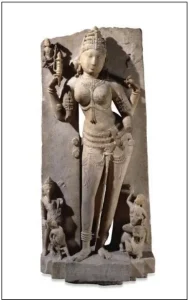
- The Vagdevi idol is an 11th-century white-marble sculpture from the Paramara period in Dhar, Madhya Pradesh.
- India identifies it as Goddess Saraswati, and it is currently housed in the British Museum in London
- Key Features
- Material & Size: The sculpture is carved from white marble, measures about 1.285 metres and weighs approximately 250 kg.
- Iconography: It depicts a four-armed deity, with surviving attributes including an elephant goad and remnants of a noose or plant stalk.
- Historical Attribution: The sculpture bears an inscription and is attributed to Vararuci, identified by some scholars with Dhanapala, a poet associated with King Bhoja’s court.
- British Museum Classification: While India identifies it as Vagdevi from Bhojshala, the British Museum catalogues it as an image of Ambika from the Jain tradition, discovered at Dhar in 1875 and acquired in 1909.
About Bhojshala Complex
- Bhojshala, located in Dhar, Madhya Pradesh, is a historically significant complex associated with the Paramara ruler King Bhoja and traditions of learning and worship.
- Key Features
-
- Centre of Learning: Traditionally associated with Sanskrit learning and Goddess Vagdevi (Saraswati) during the Paramara period.
- Architectural Heritage: The complex contains carved pillars, inscriptions and other architectural elements reflecting its historical and religious significance.
- Multiple Historical Layers: The site incorporates architectural elements from different periods, including Paramara-era structures and later Islamic additions.
- Religious Significance: The complex has been the subject of competing Hindu and Muslim claims, with Hindus associating it with Bhojshala/Vagdevi and Muslims with the Kamal Maula Mosque.
- Current Status: In May 2026, the Madhya Pradesh High Court recognised the religious character of the complex as Bhojshala, described as a temple of Goddess Vagdevi, and directed the Centre to consider representations seeking repatriation of the idol.
India–China Border
Context: Recently, India formally identified 27 places in Arunachal Pradesh on its official map, countering China’s attempts to assign fictitious names to Indian territory.
Key Highlights of Border Issue in Arunachal Pradesh
- Chinese Aggression & Renaming: China has repeatedly attempted to assign alternative names to places in Arunachal Pradesh, seeking to reinforce its territorial claims and create a parallel narrative.
- India’s Counter: India has formally marked 27 locations on the Survey of India map, including Long Ju, Thag La, Sambho Sarovar and Jaswant Garh, asserting that renaming cannot alter territorial realities.
- Border Tensions: The unresolved boundary dispute, differing perceptions of the Line of Actual Control (LAC) and military infrastructure continue to complicate India–China relations.
About India–China Border
- India shares a 3,488-km-long disputed border with China, broadly divided into Western, Middle and Eastern sectors.
- States/UT Sharing Border
- Union Territory: Ladakh.
- States: Himachal Pradesh, Uttarakhand, Sikkim and Arunachal Pradesh.
- Key Features
- Line of Actual Control (LAC): The LAC is the de facto line separating areas controlled by India and China, but its alignment is not mutually agreed upon, creating perception gaps and patrol confrontations.
- Three Sectors: The Western Sector covers Ladakh and Aksai Chin; the Middle Sector covers Himachal Pradesh and Uttarakhand; the Eastern Sector covers Sikkim and Arunachal Pradesh.
- Difficult Terrain: The border passes through the high-altitude Himalayan region, creating severe logistical and climatic challenges for military deployment.
- Key Conflict Points
- Galwan Valley: Site of the deadly India–China military clash in June 2020.
- Pangong Tso: Strategic high-altitude lake in Ladakh associated with competing territorial perceptions.
- Tawang: Strategically important area in Arunachal Pradesh, claimed by China as part of “South Tibet.”
- Doklam: India–Bhutan–China tri-junction area that witnessed the 2017 military standoff.
- Depsang Plains: Strategically important high-altitude area in Ladakh associated with longstanding patrolling concerns.
UPSC Online Coaching
16th BRICS Trade Ministers’ Meeting, 2026
Context: The 16th BRICS Trade Ministers’ Meeting concluded in Jaipur on August 7, 2026, under India’s BRICS Chairship.
About BRICS Trade Ministers’ Meeting
- The BRICS Trade Ministers’ Meeting is a ministerial platform for coordinating trade policies, strengthening intra-BRICS commerce, supporting developing economies and promoting a rules-based multilateral trading system.
- BRICS Formation: BRICS’ institutional cooperation began with the first BRIC Summit at Yekaterinburg, Russia, in 2009, later expanding to BRICS.
- Technical Mechanism: Trade deliberations are supported by the BRICS Contact Group on Economic and Trade Issues (CGETI), which undertakes preparatory work.
- Venue: The 16th meeting was held in Jaipur, Rajasthan, under India’s 2026 BRICS Chairship.
- Theme for BRICS 2026 : “Building for Resilience, Innovation, Cooperation and Sustainability.”
- Chair: The meeting was chaired by Union Minister of Commerce and Industry Piyush Goyal.
- Focus Areas
- WTO Reform: India advocated an open, inclusive and rules-based multilateral trading system, with the WTO at its core and preservation of Special and Differential Treatment (S&DT).
- MSMEs: Focused on internationalisation of MSMEs, improving access to trade finance and reducing the global trade-finance gap.
- Global Value Chains(GVCs) : Emphasised resilient and diversified GVCs to strengthen supply-chain security.
- Digital Services: Promoted safe and secure digitally delivered services across borders.
- Key Outcomes
- Jaipur Consensus: Agreed to study a BRICS Invoice Discounting Mechanism to improve MSME liquidity.
- MSME Credit: Adopted principles supporting cash-flow-based credit assessment rather than collateral-based lending.
- GVC Action Plan 2026–2030: Proposed a BRICS Technical Council and BRICS Connect platform.
- Economic Partnership: Advanced the Strategy for BRICS Economic Partnership 2030, covering trade, services, digital economy, innovation and sustainable development.
- Digital Trade: Adopted BRICS Principles to Facilitate Digitally Delivered Services Across Borders.
Mount Bromo National Park
Context: A fire has destroyed 148 acres of land in Indonesia’s Mount Bromo National Park.
About Bromo Tengger Semeru National Park
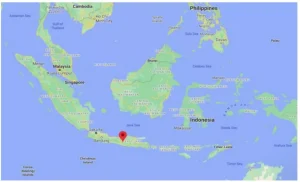
- Location: East Java, Indonesia.
- Established: 1982
- Named after: It derives its name from Mount Bromo (the Tengger volcanic complex) and Mount Semeru.
- Mount Bromo: It is an active somma volcano, meaning its current cone formed within the collapsed crater of an older, larger mountain
- It is part of the Tengger Caldera, which is approximately 10 kilometers in diameter and is surrounded by a vast plain known as the Sea of Sand.
- It is located 2,329 meters (7,641 feet) above sea level.
- Mount Semeru: At about 3,676 m, it is the highest mountain in Java and an active volcano.
- UNESCO Designation: In 2015, it was listed in UNESCO’s World Network of Biosphere Reserves.
- Biodiversity: It protects diverse montane and tropical ecosystems and wildlife.
- Cultural Significance: The Tenggerese people have strong cultural and religious associations with the region.
- The Tenggerese are an indigenous ethnic community living mainly around the Tengger Mountains of East Java, Indonesia.
- The Tengger Mountains are a major volcanic landscape of East Java, centred on the Tengger Caldera and Mount Bromo.
- Major Threats: Volcanic eruptions, forest fires, tourism pressure and habitat degradation.
Danube River Crisis
Context: The Danube in Europe is witnessing exceptionally low water levels.
About the Danube River
- Origin: Black Forest region of Germany.
- Mouth: Drains into the Black Sea, forming the Danube Delta.
- Length: Approximately 2,850–2,900 km.
- Status: Second-longest river in Europe, after the Volga.
- Flow Direction: Generally flows eastwards across Central and Eastern Europe.
- Countries: Flows through or forms the borders of 10 countries — the highest number for any river in the world:
- Germany, Austria, Slovakia, Hungary, Croatia, Serbia, Romania, Bulgaria, Moldova and Ukraine.
- Major Cities on its banks: Vienna, Bratislava, Budapest and Belgrade.
Click to Know UPSC Coaching Centres in India
Causes of Exceptionally Low Water Levels
- Prolonged heatwaves: Successive heatwaves across the Danube Basin have increased water loss.
- Rainfall Deficit: Below-average rainfall has significantly reduced river inflows.
- Increased Evaporation: Persistent high temperatures have accelerated evaporation, causing river levels to fall earlier than usual.
- Saharan Influence: Hot, dry air moving northwards from the Sahara has contributed to suppressed rainfall over parts of Central and Eastern Europe.
Seafarer First Initiative
The Union Minister of Ports, Shipping and Waterways launched a ‘Seafarer-First’ Initiative.
- It was launched as a response to an attack on two merchant vessels (MT Al Bahiyah and MT Mombasa) carrying Indian crew members in the Strait of Hormuz.
About Seafarer First Initiatives
- It is a government contingency mechanism to protect Indian seafarers amid conflicts and security risks in West Asian waters.
- Nodal Ministry: Ministry of Ports, Shipping and Waterways.
- It includes a series of measures like real-time monitoring of Indian crew members, dedicated family support and enhanced inter-ministerial coordination.
 8 Aug 2026