India–Japan Startup and Deep-Tech Cooperation
Context: India and Japan have reaffirmed cooperation in startups, deep-tech, innovation and Micro, Small and Medium Enterprises (MSMEs).
UPSC Online Courses
Key Highlights

- Startup Ecosystem: India has established nearly 2.5 lakh startups over the past decade.
- $1-billion Fund of Funds: India has proposed a $1-billion Fund of Funds focused on deep-tech enterprises, with Japanese investors invited to participate.
- Pitching Series: The India–Japan Pitching Series has connected 65 Indian startups with around 100 Japanese corporations, resulting in 30+ business tie-ups.
- Key Areas of Cooperation: Artificial Intelligence (AI), semiconductors, healthcare, space, defence, advanced manufacturing and deep technology.
Four-Pillar Framework for India–Japan Startup Cooperation
- Deep-Tech Capital Corridor: Mobilise patient capital for research, innovation and commercialisation.
- Two-Way Innovation Bridge: Connect universities, incubators, research institutions and laboratories.
- Manufacturing and Technology Integration: Combine India’s scale and engineering talent with Japan’s precision manufacturing and technology.
- Joint Startup Pitching Platforms: Facilitate interaction between startups, corporations, venture funds, and investors.
Arctic Shrubification
Context: Recent research in Alaska’s North Slope, including studies at the Toolik Field Station, shows that Arctic vegetation is becoming taller and greener as the region warms.
About Arctic shrubification
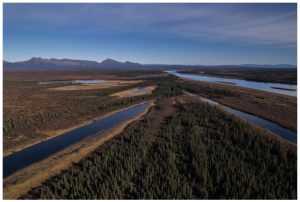
- Arctic shrubification refers to the increasing growth, height, and northward expansion of shrubs in the traditionally treeless Arctic tundra.
- Rapid warming, longer growing seasons, and warmer summers are enabling shrubs to grow taller and allowing species previously restricted by cold conditions to expand into new areas.
- Albedo Effect: Darker, taller shrubs absorb more solar radiation than snow, reducing albedo and intensifying Arctic amplification.
- Permafrost Impact: Shrubs trap snow and insulate the ground, potentially raising soil temperatures and accelerating permafrost thaw.
- Carbon Cycle: Shrub growth increases carbon dioxide (CO₂) uptake, while permafrost thaw can release CO₂ and methane (CH₄).
- Ecological Impact: Shrub expansion alters soil moisture, nutrient cycling, snow cover, and stream temperatures, affecting Arctic biodiversity and wildlife habitats.
Waterspout
Context: Recently, a rotating water column resembling a waterspout was observed over the Brahmaputra River in Assam’s Barpeta district, drawing attention to this rare atmospheric phenomenon and its formation over water.
What is a Waterspout?
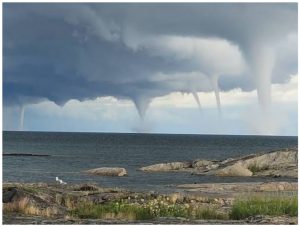
- A waterspout is a rotating column of air and water droplets extending from a cloud towards the surface of a water body.
- Formation: It develops when rotating air interacts with favourable atmospheric conditions over water, often beneath cumuliform clouds.
- Types: Waterspouts are broadly classified into fair-weather waterspouts and tornadic waterspouts.
- Fair-weather Waterspout: Generally forms in relatively less severe weather and is usually weaker and shorter-lived.
- Tornadic Waterspout: Essentially a tornado occurring over water, generally associated with severe thunderstorms and stronger winds.
- Duration: Waterspouts are often short-lived, though their duration can vary depending on atmospheric conditions.
Key Features
- Over Water: Unlike conventional tornadoes, waterspouts form over oceans, seas, lakes or large rivers.
- Funnel Shape: They typically appear as a funnel-shaped rotating column connecting the water surface with a cloud base.
- Movement: They may move across the water and, in some cases, reach the shoreline.
- Hazard: They can pose risks to boats, fishermen and people engaged in water-based activities.
- Prediction: Their exact timing and location are difficult to predict because of their small scale and rapidly changing atmospheric conditions.
Waterspout vs Tornado
- Waterspout: Forms over a water surface such as rivers, lakes, seas and oceans, while a tornado generally forms over land.
- Intensity: Fair-weather waterspouts are generally weaker, whereas tornadoes are typically associated with stronger winds.
- Weather Conditions: Tornadic waterspouts are associated with severe thunderstorms and are essentially tornadoes occurring over water.
- Nature: A waterspout is identified by its occurrence over water, while a tornado primarily develops over land.
National Sports Day 2026
Context: The “Khelo India Dialogue – Khel Ki Baat, Pradhan Mantri Modi Ke Saath” is being organised nationwide on 27 August 2026 to mark National Sports Day.
Key Highlights
- Objective: Provide youth and budding athletes a platform to share ideas on India’s sports and youth ecosystem.
- Four Key Themes:
- Strengthening grassroots sports infrastructure, coaching and opportunities.
- Preparing sporting talent for the 2036 Olympics through scientific talent identification and athlete development.
- Promoting youth leadership and participation in governance.
- Developing future-ready skills, volunteering and nation-building opportunities.
UPSC Online Classes
About National Sports Day
- National Sports Day is celebrated every year on 29 August to commemorate the birth anniversary of legendary hockey player Major Dhyan Chand.
- Officially observed from 2012 onwards across India.
- National Sports Day 2026 Theme: Khelega Bharat, Jeetega Bharat
- Objectives
-
- Promote fitness and health through sports participation.
- Honour legendary sportspersons who have contributed to India’s sporting legacy.
- Encourage youth participation in grassroots sports.
UN Peacekeepers in South Sudan
Context: India has condemned the attack on peacekeepers deployed with the UN Mission in South Sudan (UNMISS).
Key Points
- Casualties: Two UN peacekeepers were killed and seven injured; an Ethiopian Blue Helmet was among those killed.
- Blue Helmets: UN military personnel who wear light-blue helmets/berets and serve in conflict zones to:
- Monitor ceasefires
- Protect civilians
- Support peace and stability
About UN Mission in South Sudan (UNMISS)
- Established: 9 July 2011 by the UN Security Council, following South Sudan’s independence.
- Part of: United Nations (UN) Peacekeeping Operations.
- Area of Operation: South Sudan, particularly conflict-affected areas.
- Headquarters: Juba, South Sudan.
- Key Functions: Protect civilians, monitor human rights, support peace processes, and assist in implementing peace/ceasefire arrangements.
- Mandate: Works under a UN Security Council mandate to promote peace, stability and civilian protection in South Sudan.
Smew Recorded for the First Time at Laokhowa Wildlife Sanctuary
Context: Recently, the Smew, a migratory diving duck, has been recorded for the first time at Laokhowa Wildlife Sanctuary in Assam, highlighting the ecological significance and health of its wetland habitats.
About Smew
- Scientific Name: Mergellus albellus; a small diving duck belonging to the duck family Anatidae.
- Distribution: Breeds mainly across northern Eurasia and migrates southwards during winter.
- Habitat: Prefers freshwater wetlands, lakes and slow-moving water bodies, particularly during migration and wintering.
- Feeding: A diving waterbird that primarily feeds on small fish, aquatic invertebrates and other aquatic organisms.
- Conservation Significance: The presence of a migratory species like the Smew can indicate the availability of suitable wetland conditions and food resources.
Laokhowa Wildlife Sanctuary
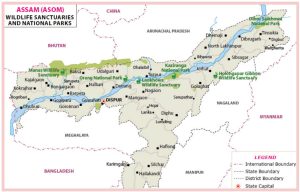
- Protected Area: 70.13 sq km sanctuary within the Laokhowa–Burhachapori ecosystem and a buffer of the Kaziranga Tiger Reserve.
- Location: Nagaon, Assam, on the southern bank of the Brahmaputra River.
- Wildlife Corridor: Connects wildlife habitats around Kaziranga and Orang, supporting movement of large mammals.
- Wetlands: Contains important beels such as Rowmari, Dondowa and Muamari, supporting fish and migratory waterbirds.
- Habitat & Biodiversity: Includes alluvial grasslands, riparian forests and wetlands; supports rhino, tiger, elephant, wild buffalo and 225-plus bird species.
- Recent Record: Smew recorded for the first time during the 7th Kaziranga Waterbird Count 2026; Bengal Florican was also recorded.
Click to Know UPSC Coaching Centres in India
Ecological Significance
- Wetland Health: The occurrence of migratory waterbirds can serve as an indicator of suitable habitat conditions.
- Biodiversity Monitoring: New species records improve understanding of bird distribution and wetland ecology.
- Conservation: The findings reinforce the need for habitat protection, scientific monitoring and enforcement against activities such as illegal fishing.
 27 Aug 2026