UPSC PYQs

Prelims, Mains & Optional PYQs

UPSC Notes

Comprehensive & Short Notes

Satya Niketan Building Collapse: Ethics, Accountability & Preventive Governance

17 Sep 2026

Satya Niketan Building Collapse: Ethics, Accountability & Preventive Governance

Subject: GS 4: Ethics, Integrity and Aptitude

Context: The Satya Niketan building collapse in Delhi, which killed seven people, including students, raises wider ethical questions around meaningful choice, structural vulnerability, duty of care, accountability, compassion and preventive governance

UPSC Course Fees Online

Background of the Case

  • Student Accommodation: Satya Niketan is a major student and aspirant hub where many young people depend on private hostels and paying-guest (PG) accommodation.
  • Affordability Constraint: Limited resources and inadequate availability of affordable institutional accommodation can push students towards cheaper but potentially unsafe alternatives.
  • Regulatory Dimension: The incident raises questions regarding building permissions, structural safety, occupancy norms, inspection and enforcement.
  • Shared Responsibility: Ethical responsibility extends across property owners/operators, regulatory authorities, educational institutions and other relevant stakeholders.
  • The tragedy thus illustrates how individual vulnerability can interact with institutional gaps, turning an apparently personal accommodation decision into a broader governance issue.

Satya Niketan Building Collapse

Key Ethical Questions Raised

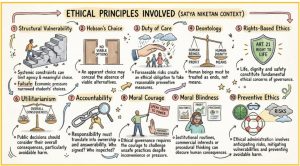
  • Is a Choice Really a Choice?
    • Hobson’s Choice: An apparent choice in which an individual has little or no meaningful alternative.
    • Economic Constraints: When students cannot afford safer accommodation or adequate alternatives are unavailable, choosing a low-cost PG may reflect a forced compromise rather than genuine autonomy.
    • Structural Vulnerability: Socioeconomic and institutional conditions can restrict individual agency and meaningful choice.
    • State’s Protective Duty: Greater vulnerability strengthens the State’s responsibility to ensure minimum standards of safety and dignity.
  • Where Does Responsibility Begin and End?
    • Beyond Rule Violation: Ethical responsibility concerns not only who violated a rule, but also who had a duty to anticipate and prevent foreseeable harm.
    • Diffusion of Responsibility: When multiple authorities and institutions are involved, responsibility may become fragmented, with each assuming that another actor will intervene.
    • Omission as Ethical Failure: Failure to act despite known or foreseeable risks can constitute an ethical failure, even where formal responsibilities are divided.
    • Accountability in Governance: Public authority requires ownership, answerability and corrective action, rather than mere procedural compliance.
  • Can Administrative or Commercial Efficiency Come Before Human Life?
    • Kantian Deontology: Human beings must be treated as ends in themselves, and never merely as instruments for profit or administrative convenience.
    • Rights-Based Ethics: The Right to Life under Article 21 places protection of life and dignity at the centre of public governance.
    • Ethical Limits of Cost-Cutting: Financial savings or administrative convenience cannot ethically justify foreseeable and preventable risks to human life.
    • Primacy of Human Welfare: Administrative efficiency derives its legitimacy from serving life, dignity, safety and public welfare.
  • What Does Compassion Mean in Public Service?
    • Compassion as Awareness: George Saunders emphasises the importance of attention to the vulnerability and suffering of others.
    • Sympathy After Tragedy: Emotional concern expressed after harm has occurred.
    • Compassion Before Tragedy: Ethical compassion requires awareness, attention and preventive action before avoidable harm occurs.
    • Human-Centred Administration: An ethical public servant must see the person behind the file, rule, building or statistic.
    • Compassion in Action: Compassion becomes meaningful when translated into inspection, intervention, risk mitigation and prevention.

Need for Ethical Reflection

  • From Reaction to Prevention: Tragedies often trigger sympathy after loss; ethical governance requires anticipatory action to identify and mitigate foreseeable risks.
  • From Formal Choice to Genuine Agency: The incident highlights that formal freedom of choice is insufficient when economic and institutional constraints leave people with unsafe alternatives.
  • From Rule Compliance to Duty of Care: Public administration must move beyond procedural compliance towards substantive protection of life, dignity and public welfare.
  • From Diffused Responsibility to Clear Accountability: Multiple actors and institutions can create diffusion of responsibility; ethical governance requires identifiable responsibility for both actions and omissions.
  • From Efficiency to Human-Centred Governance: Administrative and commercial efficiency acquire legitimacy only when they remain connected to human dignity, safety and welfare.
  • From Sympathy to Compassion: Compassion in public service should become awareness, attention, anticipation and preventive action, rather than remaining an emotional response after tragedy.

IAS coaching

Key Ethical Challenges

  • Regulatory Fragmentation: Multiple authorities can create gaps in inspection, monitoring and enforcement.
  • Diffusion of Responsibility: Shared institutional responsibility can weaken individual ownership and accountability.
  • Economic Vulnerability: Students may prioritise affordability over safety when alternatives are limited.
  • Information Asymmetry: Tenants may lack adequate information about structural condition, permissions and safety certification.
  • Administrative Inertia: Officials may continue routine procedures even when warning signs or complaints exist.
  • Commercial Incentives: Demand for accommodation can create incentives for unauthorised construction or overcrowding.
  • Reactive Enforcement: Authorities may intensify action after a tragedy rather than developing continuous risk-based monitoring.

Global Practices in Preventive Safety Governance

  • Japan – Building Safety Standards: Strong emphasis on seismic safety, building codes and periodic inspections, reflecting a preventive approach to disaster risk.
  • Singapore – Regulatory Enforcement: Integrated urban regulation and strict building-control mechanisms emphasise compliance, inspection and public safety.
  • United Kingdom – Building Safety Regime: The post-Grenfell framework has strengthened accountability across the building lifecycle, including clearer responsibilities for building safety.
  • United States – Fire and Building Codes: Building and fire-safety codes, inspection systems and occupancy requirements provide institutional mechanisms for risk prevention.
  • Sendai Framework for Disaster Risk Reduction: Promotes a global shift from merely responding to disasters towards understanding risk, reducing vulnerability and strengthening resilience.

Way Forward

  • Risk-Based Safety Planning: Identify high-risk PGs, hostels and densely occupied buildings through systematic risk mapping.
  • Periodic Structural Audits: Conduct safety assessments based on risk, occupancy and building vulnerability, rather than waiting for complaints.
  • Integrated Institutional Coordination: Establish coordinated mechanisms among municipal bodies, universities, fire services and disaster-management authorities.
  • Affordable Safe Accommodation: Expand affordable, regulated student housing to reduce vulnerability and prevent forced compromises.
  • Transparent Safety Information: Maintain accessible databases covering building permissions, safety certifications, inspection status and compliance.
  • Whistle-Blower Protection: Provide confidential and protected reporting mechanisms for tenants, workers and other vulnerable groups.
  • Clear Accountability: Fix responsibility across the entire chain of permission, inspection, certification, monitoring and enforcement.
  • Ethics-Based Administration: Embed compassion, duty of care, moral courage and preventive ethics into public-service training and institutional practices.

Click to Know UPSC Coaching Centres in India

Conclusion

The Satya Niketan tragedy highlights that choice without safe alternatives is not meaningful autonomy. Ethical governance demands compassion before tragedy, institutional accountability and preventive action, ensuring that vulnerable citizens are not forced to trade safety for aspiration.

News Source: Indian Express

Check Out UPSC CSE Books

Visit PW Store

online store 1

Satya Niketan Building Collapse: Ethics, Accountability & Preventive Governance

Need help preparing for UPSC or State PSCs?

Connect with our experts to get free counselling & start preparing

Free Counselling for UPSC Aspirants

Connect with our experts and take the right next step.

Expert Guidance
Personalized Strategy
100% Free

Book Your Free Session

NEED ASSISTANCE?

Request a Callback

Our counsellor will connect with you and help you choose the right course and centre.

  • Expert Guidance
  • Course & Fee Information
  • Quick Callback Support

Request a Callback

Books
UPSC PYQs
UPSC Notes
Current Affairs
Quick Revise Now !
AVAILABLE FOR DOWNLOAD SOON
UDAAN PRELIMS WALLAH
Comprehensive coverage with a concise format
Integration of PYQ within the booklet
Designed as per recent trends of Prelims questions
हिंदी में भी उपलब्ध
Quick Revise Now !
UDAAN PRELIMS WALLAH
Comprehensive coverage with a concise format
Integration of PYQ within the booklet
Designed as per recent trends of Prelims questions
हिंदी में भी उपलब्ध

<div class="new-fform">


    </div>

    Subscribe our Newsletter
    Sign up now for our exclusive newsletter and be the first to know about our latest Initiatives, Quality Content, and much more.
    *Promise! We won't spam you.
    Yes! I want to Subscribe.