Udaan, Prahaar, Q&A Bank etc.
CA Magazines & Editorials
Polity Questions in UPSC Prelims 2026 continue to play an important role, and this year’s paper included 14 questions from this segment. These questions were designed to test the ability to connect applications in real life with static concepts.
Polity Questions in UPSC Prelims 2026: The UPSC Civil Services Examination (CSE) Prelims 2026 General Studies Paper I serves as a crucial examination for aspiring candidates, often featuring numerous Polity Questions in UPSC Prelims 2026. The paper carries a maximum of 200 marks and includes a penalty for incorrect answers, emphasizing accuracy.
The 2026 Polity section required in-depth understanding of topics, confirming UPSC’s trend toward analytical rather than factual questions.
| Polity Questions in UPSC Prelims 2026 Overview | |
| Parameter | Details |
| Total Questions | 14 |
| Question Set | Set A,B,C, D, GS Paper I |
| Marks per Question | 2 marks each |
| Negative Marking | ⅓ for incorrect answers |
A significant number of Polity Questions in UPSC Prelims 2026 General Studies Paper I are drawn from recent global and national events. These questions highlight the importance of staying updated with contemporary developments and their implications. In this year’s Paper, there were 14 questions asked about Polity. Here are the questions of Polity, asked in the examination:
Match List I with List II and select the answer using the code given below the Lists:
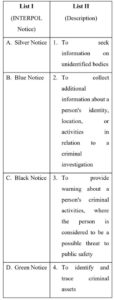
Code:
(a) 3 1 2 4
(b) 3 2 1 4
(c) 4 2 1 3
(d) 4 1 2 3
Correct Answer – C
The Bureau of Indian Standard (BIS) recently introduced a national standard to test and assess bomb disposal system. Which of the following statements with regard to this system is/are correct?
Select the answer using the code given below:
(a) 1, 2 and 3
(b) 2 and 3 only
(c) 1 and 2 only
(d) 1 only
Correct Answer – C
Which of the following statements about insurance in aviation sector is/are correct?
(a) 1 only
(b) 2 only
(c) Both 1 and 2
(d) Neither 1 nor 2
Correct Answer – C
Explore UPSC Foundation Courses

Explore UPSC Foundation Courses

Mr. X, a senior officer, was overseeing a critical vaccination programme during a pandemic. He found that a private service provider responsible for vaccine distribution was compromising on quality to make profits. Despite immense pressure to manage the issue due to vested interests, he raised his voice based on the principles of public administration which he learnt during various training programmes attended across his career. He reported the issue to the appropriate vigilance authority and halted the contract to ensure citizen welfare.
Which one among the following principles of public administration was most strongly demonstrated by Mr. X’s actions?
(a) Esprit de corps
(b) Equity
(c) Accountability
(d) Delegation
Correct Answer – C
77. In a multi-ethnic district where both economic and historical grievances frequently led to community tensions, a Government appointment has arisen with a decision to allocate land for a waste management facility near a tribal hamlet, sparking protests by the tribal community, which claimed that the land was sacred and critical to their cultural identity. At the same time, urban residents and local industries supported the project, citing severe solid waste challenges and health concerns due to lack of a proper disposal site. The conflict has escalated with road blockades, social media campaigns, and allegations of police excesses.
As a responsible Government official, you are tasked with resolving the situation through mediation, ensuring a sustainable outcome that balances environmental needs, tribal rights, and urban public health.
Consider the following statements with reference to the above:
Which of the statements given above would contribute to the resolution process?
(a) 1, 3 and 4 only
(b) 2, 3 and 4 only
(c) 1 and 2 only
(d) 1, 2, 3 and 4
Correct Answer – A
Ms. X is a mid-level civil service official working in the urban development department of a major city. Recently, she was involved in approving a contract for a public infrastructure project — a new community park. During the approval process, she received a piece of confidential information indicating that one of the shortlisted contractors had a history of poor workmanship and allegations of corruption in other cities, though nothing had been legally proven. The Head of the Department, Mr. Y, advised her not to disclose this information to the project committee or the public because it could delay the project and damage the city’s reputation. However, Ms. X believed that withholding such information compromised transparency and public trust.
What amongst the following should Ms. X do now?
Select the answer using the code given below:
(a) 1 and 2 only
(b) 3 only
(c) 2 and 3 only
(d) 1, 2 and 3
Correct Answer – b
X’ was addressing a seminar on the meaning of the term ‘law’ as provided under Article 13, part III of the Constitution of India. ‘X’ explained that the meaning of the term ‘law’ in the Constitution of India was comprehensive. It included ordinances, orders, and even rules and regulations. ‘Y’ pointed out that the term ‘law’ Article 13 also included custom or usage having in the territory of India the force of law, to which ‘X’ was not convinced.
Based on the above, select the correct conclusion from the options given below:
(a) ‘X’ is correct in the interpretation of law, including the view on non-inclusion of custom.
(b) The view of ‘Y’ that ‘law’ included custom is not correct.
(c) The views of both ‘X’ and ‘Y’ are correct.
(d) The view of only ‘Y’ is correct.
Correct Answer – d
Consider the following statements with reference to the Constitution of India:
1. There is no Article in the Constitution of India that specifies that the Constitution of India will be officially called the ‘Constitution of India’.
2. There is no Article in the Constitution of India that specifies that the Indian Independence Act, 1947 and the Government of India Act, 1935 stand repealed.
3. There is no Article in the Constitution of India that mentions 26th January, 1950 as the date of the commencement of the Constitution of India.
Which one of the following conclusions based on the above statements is correct?
(a) All three statements are correct.
(b) There is no correct statement.
(c) There are two correct statements that include statement 3.
(d) There is only one correct statement.
Correct Answer – b
Which of the following statements with regard to the persons with disabilities in India is/are correct?
Select the answer using the code given below:
(a) 1 and 2
(b) 2 only
(c) 1 and 3
(d) 1 only
Correct Answer – b
Consider the following statements about the provisions pertaining to the Scheduled Castes and the Scheduled Tribes in India:
Which one of the following conclusions based on the above statements is correct?
(a) There are two correct statements, that include statement 2.
(b) There are two correct statements, that are statements 1 and 3.
(c) There is only one correct statement.
(d) All three statements are correct.
Correct Answer – A
Explore Prarambh Course

Explore Prarambh Course

Consider the following statements in respect of questions asked by the Members in the Parliament of India:
Which one of the following conclusions based on the above statements is correct?
(a) All the three statements are correct.
(b) There are two correct statements, that include statement 2.
(c) There is only one correct statement.
(d) There is no correct statement.
Correct Answer – C
Consider the following statements about the Committee on the Welfare of Scheduled Castes and Scheduled Tribes of the Parliament of India:
Which one of the following conclusions based on the above statements is correct? (a) There are four correct statements.
(b) There is only one correct statement, that is statement 2.
(c) There are two correct statements, that include statement 1.
(d) There is no correct statement.
Correct Answer – D
Consider the following statements about Mission Sudarshan Chakra of India:
Which of the statements given above is/are correct?
(a) 1, 2 and 3
(b) 1 and 2 only
(c) 2 and 3 only
(d) 1 only
Correct Answer – A
Consider the following statements about river bridges connecting India with neighbouring countries:
Which of the statements given above is/are correct?
(a) 1 and 2
(b) 2 and 3
(c) 1 only
(d) 3 only
Correct Answer – D
To prepare Polity questions for UPSC Prelims, focus on concept clarity, repeated revision, and lots of MCQ practice. Polity is a high-scoring area, and standard guidance emphasizes NCERT basics, a strong core textbook, previous-year questions, and topic-wise MCQs.
Check Out UPSC CSE Books
Visit PW Store
Explore SRIJAN Courses

A total of 14 Polity questions were asked in GS Paper I.
Each question carried 2 marks, and there was negative marking of one-third for every wrong answer.
The 2026 Polity section was largely analytical, showing UPSC’s trend toward concept-based rather than purely factual questions.
Important areas included the Constitution, Parliament, judiciary, constitutional provisions, Scheduled Castes and Scheduled Tribes, persons with disabilities, and public administration ethics.
Yes, several questions were linked to recent national and international developments, so current affairs and static Polity had to be studied together.
The best approach is to build concept clarity, revise standard notes repeatedly, and practice topic-wise MCQs and previous-year questions.
Focus on Fundamental Rights, Directive Principles, Parliament, President, Prime Minister, Judiciary, federalism, constitutional bodies, and schedules of the Constitution.




Connect with our experts to get free counselling & start preparing
Join India’s trusted platform for expert guidance, quality content, proven success.
Learn anytime, anywhere.



India's leading UPSC coaching platform helping aspirants prepare for IAS, IPS, IFS and other Civil Services examinations with the best faculty and proven strategies.
<div class="new-fform">
</div>