India and South Korea unveiled a futuristic partnership to boost trade, technology cooperation, and cultural ties during South Korean President Lee’s state visit.
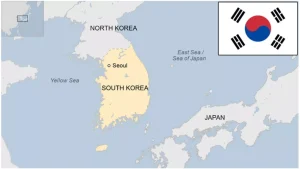
- High-Level Engagement: PM Modi and President Lee Jae Myung held bilateral talks at Hyderabad House in New Delhi.
- Global Context: Partnership framed as a joint effort to promote peace, stability, and Indo-Pacific cooperation amid global tensions.
UPSC Online Coaching
Key Outcomes of South Korean President’s Visit to India
- Strategic Vision: India and South Korea adopted a Joint Strategic Vision to transform ties into a futuristic partnership.
- Institutional Mechanism: Establishment of an India–Korea Industrial Cooperation Committee to deepen coordination across trade, industry, and resources.
- CEPA Upgrade: Decision to fast-track negotiations to upgrade the Comprehensive Economic Partnership Agreement (2009) for improved market access and investment flows.
- Digital Cooperation: Launch of the India–Korea Digital Bridge focusing on AI, semiconductors, and IT collaboration.
- Economic Security: Initiation of an Economic Security Dialogue to strengthen supply chains and critical technologies.
- Sectoral MoUs: Agreements signed across ports, steel, MSMEs, science & technology, climate action, and cultural industries.
- Financial & Investment: Plans for financial cooperation, digital payments systems, and a Korean industrial township in India.
- Global Engagement: South Korea joined the International Solar Alliance and Indo-Pacific Oceans Initiative.
- India will join the Global Green Growth Institute, headquartered in Seoul.
- People-to-People Ties: Introduction of a Distinguished Visitors Programme and Cultural Exchange Programme (2026–2030).
- Cultural Cooperation: Plans for a K-pop hub in Mumbai and India–Korea Friendship Festival (2028) to boost people-to-people ties.
Click to Know UPSC Offline Courses
India–South Korea Trade
- Trade Target: Bilateral trade to rise from USD 27 billion to USD 54 billion by 2030.
- Growth Requirement: Needs approximately 18% annual growth rate to achieve target.
- Complementary Strengths: India offers market size and workforce, while South Korea provides technology and innovation.
- Strategic Approach: Focus on co-production, co-design, and co-innovation for global value chains.
- Long-Term Vision: Strengthening ties to build a resilient economic partnership aligned with India’s $30 trillion economy goal by 2047.
 21 Apr 2026