Escalation between Iran and the United States in the Strait of Hormuz has disrupted global shipping and raised legal questions on maritime rights.
UPSC Online Preparation
Key Highlights of Iran–U.S. Blockade
- Escalation in Maritime Conflict: Iran attacked and detained ships in its waters following U.S. interception of Iranian-linked vessels on the high seas.
- U.S. Blockade Strategy: The U.S. imposed a non-physical blockade using surveillance, warnings, and ship interceptions to restrict Iranian maritime trade.
- Iran’s Retaliatory Measures: Iran fired on vessels and captured ships, citing violations of permits and maritime security norms.
- Disruption of Strait Traffic: Ship movement dropped drastically from ~100 daily transits to minimal levels due to conflict and uncertainty.
Impact of the Blockade
- Global Energy Supply Shock: The strait handles ~20% of global oil trade, and disruptions increased volatility in crude prices and supply chains.
- Impact on India’s Energy Security: India, a major oil importer, faced risks to supply lines though some Indian-flagged ships were allowed passage.
- Over 45% of its crude oil and 60% of LPG imports passing through this, the world’s most important oil transit route
- Shipping & Insurance Costs Rise: War-risk premiums surged significantly, raising freight costs and affecting global trade logistics.
- Threat to Freedom of Navigation: Restrictions undermine established norms of free navigation, affecting merchant shipping worldwide.
- Geopolitical Tensions Intensify: The crisis deepens West Asia instability, drawing in global powers and increasing risk of wider conflict.

Laws Governing International Waters
- UNCLOS (1982, in force 1994): The United Nations Convention on the Law of the Sea ensures freedom of navigation on the high seas and guarantees transit passage through international straits like Hormuz.
PW OnlyIAS ExtraEdge
About High Sea
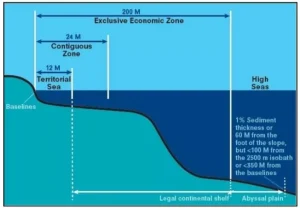
- According to the 1958 Geneva Convention, high seas are ocean areas lying beyond the jurisdiction of any state.
- They extend past a nation’s Exclusive Economic Zone (EEZ), which typically reaches 200 nautical miles (M) from its coast.
|
-
- Transit Passage Principle: Transit passage under UNCLOS allows uninterrupted and continuous movement of ships and aircraft through straits used for international navigation without coastal state interference. Innocent Passage Principle: Innocent passage permits ships to traverse territorial waters of a coastal state provided they do not threaten its peace, security, or sovereignty.
- UN Charter (1945): The United Nations Charter prohibits unilateral use of force except in self-defence or when authorised by the UN Security Council.
Factors Diluting Effectiveness of International Laws
- Lack of Enforcement Mechanism: International law depends on state compliance with no central enforcement authority.
- Great Power Politics: Major powers often bypass rules citing national interest or security concerns.
- Ambiguity in Maritime Provisions: Interpretational gaps in UNCLOS enable conflicting claims over rights and restrictions.
- Weak Multilateral Consensus: Divisions in global institutions hinder coordinated response and accountability.
Click to Know UPSC Offline Courses
Way Forward
- Strengthening Multilateral Institutions: Bodies like the International Maritime Organization must play a proactive role in dispute resolution.
- Ensuring Freedom of Navigation: Global consensus is needed to uphold open sea lanes and prevent unilateral restrictions.
- Diplomatic De-escalation: Dialogue between Iran and the U.S. is essential to stabilise the region and restore maritime security.