Prime Minister Narendra Modi is undertaking a five-nation visit covering Netherlands, Sweden, Norway and Nordic partners to strengthen strategic, economic and technological cooperation.
UPSC Online Preparation
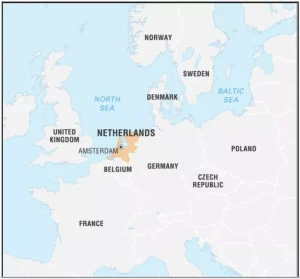
- Upgradation of Bilateral Relations: India and the Netherlands upgraded their ties to a Strategic Partnership.
 Strategic Partnership is a formalized, long-term diplomatic relationship between sovereign states or international organizations focused on advancing shared long-term interests.
- Memorandums of Understanding Signed: Both countries signed 17 Memorandums of Understanding (MoUs) in sectors such as water management, agriculture, health, renewable energy, semiconductors, mobility and critical minerals.
- A major agreement was signed between Tata Electronics and Advanced Semiconductor Materials Lithography (ASML) for semiconductor fabrication cooperation.
- Return of Chola-Era Artefacts: The Netherlands returned Chola-era Anaimangalam copper plates to India after a 14-year diplomatic effort, reflecting growing cultural cooperation.
- India-Nordic Engagement: The visit also includes participation in the third India-Nordic Summit involving Norway, Sweden, Finland, Denmark and Iceland.
- Swedish Civilian Honour: Prime Minister Narendra Modi was conferred Sweden’s highest civilian honour, the “Royal Order of Polar Star Commander Grand Cross”, recognising efforts to strengthen bilateral relations.
About India–Netherlands Relations
- India and the Netherlands share strong bilateral relations based on trade, technology, water management, agriculture, renewable energy and cultural cooperation.
- Historical Origin of Relations: Bilateral ties date back to the 17th century when the Dutch East India Company established commercial links with India.
- Diplomatic relations were formally established after India’s independence in 1947.
Key Areas of Cooperation between India and Netherlands
- Water Management and Climate Resilience: The Netherlands supports India in flood control, river rejuvenation and sustainable water management through Dutch technical expertise.
- Renewable Energy and Green Transition: Both countries cooperate in renewable energy, green hydrogen and sustainable infrastructure projects.
- Recent Memorandums of Understanding strengthened collaboration in clean energy and critical minerals.
- Semiconductor and High Technology Cooperation: Semiconductor cooperation has emerged as a major pillar of relations through the Tata Electronics-ASML partnership.
- Cooperation also includes advanced manufacturing, innovation and digital technologies.
- Agriculture and Food Processing: The two countries collaborate in agricultural technology, food processing and sustainable farming practices.
- Maritime and Logistics Cooperation: The Netherlands supports India’s port modernisation and logistics infrastructure development due to its expertise in maritime trade systems.
- Strong Bilateral Trade: Bilateral trade between India and the Netherlands exceeded nearly USD 27 billion in 2023-24.
- The Netherlands is among India’s largest export destinations in Europe and accounts for over 5% of India’s merchandise exports.
- Key Indian Exports: India exports petroleum products, pharmaceuticals, chemicals, machinery and textiles to the Netherlands.
- Foreign Investment Partner: The Netherlands is among the leading foreign investors in India in sectors such as logistics, technology, renewable energy and manufacturing.
- The Netherlands ranks as the 4th largest overall Foreign Direct Investment (FDI) investor in India, with cumulative inflows exceeding US 55 billion since the year 2000.
- Indian Diaspora Presence: The Netherlands is home to the second-largest Indian diaspora in Europe (after the UK ), with a population exceeding 240,000.
- The community consists of two main groups that is the historically established Indo-Surinamese (Hindustani) community, and a rapidly growing population of modern Indian expatriates and international students
- Cultural and Heritage Cooperation: The return of Chola-era copper plates reflects increasing collaboration in cultural preservation and repatriation of heritage artefacts.
Potential Significance of Recent MoUs
- Strengthening India’s Semiconductor Ecosystem: Semiconductor agreements can support India’s objective of becoming a global electronics and chip manufacturing hub.
- Enhancing Energy Security and Sustainability: Cooperation in renewable energy and critical minerals can strengthen India’s clean energy transition and reduce import dependence.
- Boosting Technological Self-Reliance: Partnerships in advanced technology and innovation support India’s vision of technological self-reliance under Atmanirbhar Bharat.
- Expanding Strategic Presence in Europe: The Strategic Partnership strengthens India’s engagement with Europe amid evolving geopolitical and supply-chain realignments.
- Improving Climate and Water Governance: Dutch expertise in water management can support India’s climate adaptation, flood mitigation and urban sustainability initiatives.
- Deepening Cultural Diplomacy: The return of Chola-era artefacts strengthens India’s cultural diplomacy and global efforts for repatriation of heritage objects.
Click to Know UPSC Offline Courses
Conclusion
India-Netherlands Strategic Partnership reflects the growing convergence between economic cooperation, technological collaboration, cultural diplomacy and emerging geopolitical priorities.
 18 May 2026