Central Consumer Protection Authority (CCPA)
Context: The CCPA imposed a ₹10 lakh penalty on Rapido for misleading tipping prompts and dark patterns in its ride-booking interface.
UPSC Online Courses
Key Issues Highlighted by CCPA
- Confirm Shaming: Confirm Shaming is a dark pattern that uses pressure, fear or guilt to influence consumers into accepting an option.
- Rapido displayed prompts suggesting that paying more would increase the chance of getting a ride.
- Interface Interference: Interface Interference occurs when website or app design visually prioritises one choice over another, influencing consumer decisions.
- Rapido’s pricing slider used green for higher prices and red/orange for lower prices, while providing greater scope to increase the fare.
- Misleading Advertisement: A misleading advertisement contains false, unsubstantiated or deceptive claims about goods or services.
- Rapido’s claim that paying more increased the likelihood of securing a ride was held unsubstantiated.
- Unfair Trade Practice: An unfair trade practice involves deceptive or unfair methods used to promote or provide goods and services.
- CCPA found that prompting additional payment before ride confirmation unfairly influenced consumers.
- Advance-Tipping Issue: CCPA held that a tip is ordinarily a voluntary payment after service delivery and should not be presented as a condition for obtaining the service.
About Central Consumer Protection Authority (CCPA)
- The Central Consumer Protection Authority (CCPA) is a statutory regulatory body established in July 2020 under Section 10(1) of the Consumer Protection Act, 2019, to protect consumers as a class.
- Nodal Body: CCPA functions under the Department of Consumer Affairs, Ministry of Consumer Affairs, Food and Public Distribution.
- Composition: The Authority is headed by a Chief Commissioner and has two Commissioners, dealing with goods and services respectively.
- Investigation Wing: Its Investigation Wing, headed by a Director-General (DG), investigates violations; District Collectors can also investigate matters under the Act.
- Powers: CCPA can conduct suo motu investigations, order recall of unsafe goods, direct refunds, modify or withdraw misleading advertisements, and impose penalties.
- Key Role: It proactively addresses consumer rights violations, unfair trade practices, misleading advertisements and dark patterns, including those emerging in e-commerce and digital platforms.
SARAL AI
Context: CSIR-NIScPR has adopted SARAL AI to transform research papers into accessible short videos, supporting wider dissemination of scientific knowledge.
About SARAL AI
- SARAL AI (Simplified and Automated Research Amplification and Learning) is an AI-based platform that converts complex scientific research, technology documents and patents into simple, accessible formats.
- Launched By: The platform was developed and launched by the Anusandhan National Research Foundation (ANRF) under the Department of Science and Technology (DST), with technical development led by researchers at IIIT Hyderabad.
- Key Features
- Multimedia Conversion: SARAL AI converts research papers into short videos, reels, podcasts, academic posters and simplified summaries, making technical knowledge easier to understand.
- Multilingual Accessibility: The platform supports content generation and voiceovers in multiple Indian languages, helping overcome language barriers in scientific communication.
- Automated Content Generation:Users can provide PDFs, LaTeX files or arXiv links, after which AI models can generate presentation scripts and voice narration.
- Scientific Knowledge Dissemination: By simplifying jargon-heavy research, SARAL AI facilitates knowledge transfer from researchers to students, policymakers and the general public, thereby promoting wider societal engagement with science.
UPSC Online Classes
About CSIR-NIScPR
- CSIR-National Institute of Science Communication and Policy Research is a premier public institute established in 2021 under the Council of Scientific and Industrial Research (CSIR).
- Formation: The institute was formed through the merger of two CSIR institutions, namely NISCAIR (National Institute of Science Communication and Information Resources) and NISTADS (National Institute of Science, Technology and Development Studies).
- Location: CSIR-NIScPR is headquartered in New Delhi,
- Key Areas of Research
-
- Science Communication: It develops strategies for communicating scientific knowledge through science journalism and public outreach.
- Science Policy: It undertakes science policy analysis, technology assessment and science diplomacy to support evidence-based policymaking.
- Socio-economic Studies: It examines the socio-economic impacts of science and technology and their contribution to national development.
- Innovation Ecosystem: It studies innovation, entrepreneurship and technology-based ecosystems, facilitating stronger linkages between research and society.
Bamboo Mass Flowering and Die-Off
Context: A study by the Kerala Forest Research Institute (KFRI) has warned that synchronous mass flowering and die-off of bamboo can trigger an ecological crisis, including invasive weed outbreaks, wildfires, rodent surges and human-elephant conflict.
About Bamboo
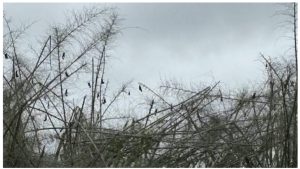
- Bamboo is a fast-growing, woody grass belonging to the Poaceae family, despite its tree-like appearance.
- Monocarpic Life Cycle: Many woody bamboo species flower only once in their lifetime and die after flowering, with flowering intervals ranging from 40 to over 120 years.
- Mass Flowering: Large bamboo populations may flower synchronously across vast areas, producing huge quantities of seeds, a phenomenon associated with masting.
- India: India is among the major bamboo-producing countries globally, with bamboo cultivation and utilisation supporting rural livelihoods and several industries.
- Legal Status: The Indian Forest (Amendment) Act, 2017 excluded bamboo grown on non-forest land from the legal definition of “tree” under the Indian Forest Act, 1927, easing its cultivation, harvesting and transportation.
- Economic Uses: Bamboo is used in construction, furniture, handicrafts, paper, textiles, food products and bioenergy, making it an important rural livelihood and sustainable-resource crop.
- Ecological Significance: Bamboo provides food and habitat for wildlife, contributes to carbon cycling and soil protection, and helps regulate forest microclimates.
Why Mass Flowering Is a Concern
- Canopy Collapse: Synchronous flowering is followed by widespread bamboo senescence and death, creating large canopy gaps.
- Invasive Weeds: Increased sunlight and soil disturbance can favour Senna spectabilis, Mikania micrantha and Lantana camara, suppressing native regeneration.
- Rodent Boom: Massive quantities of carbohydrate-rich bamboo seeds provide a temporary food surplus, potentially triggering rapid growth of granivorous rodent populations.
- Wildfire Risk: Accumulation of large quantities of dry, dead bamboo culms increases forest fuel load and wildfire intensity.
- Elephant Conflict: Loss of bamboo forage can force Asian elephants (Elephas maximus) to move towards agricultural areas, increasing human-elephant conflict.
UPSC Online Coaching
Hilsa Fish (Tenualosa ilisha)
Context: India has exported around 500 tonnes of Hilsa to Bangladesh, reversing the traditional pattern of Bangladesh supplying Hilsa to India.
About Hilsa Fish
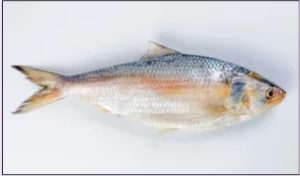
- Hilsa (Tenualosa ilisha), locally called Ilish, is a prized anadromous fish of the Clupeidae (herring) family, widely valued for its culinary and economic significance.
- Distribution: It is native to the North Indian Ocean, especially the Bay of Bengal, and occurs across river systems and coastal waters from the Persian Gulf to Southeast Asia.
- Key Features
- Anadromous Migration: Hilsa spends most of its life in marine waters but migrates upstream into freshwater rivers, including the Ganga, Padma and Meghna, for spawning.
- Physical Characteristics: It has a streamlined, silvery and laterally compressed body, can reach about 50 cm, and is known for its oily texture and distinctive flavour.
- Nutritional Value: Hilsa provides omega-3 fatty acids, high-quality protein and essential minerals, contributing to its nutritional importance.
- Production and Trade
- Largest Producing Nation: Bangladesh is the leading Hilsa-producing country and accounts for a major share of global Hilsa catches.
- Hilsa has Geographical Indication (GI) recognition in Bangladesh.
- Largest Indian Producer: Gujarat, particularly the Bharuch region along the Narmada estuary, has emerged as an important source of Hilsa in India, while West Bengal remains a major centre of consumption and traditional trade.
About Anadromous Migration
- Anadromous migration is a life-cycle strategy in which fish hatch and reproduce in freshwater, migrate to the sea for feeding and growth, and return to freshwater to spawn.
- Examples:
-
- Pacific salmon (Oncorhynchus spp.)
- Atlantic sturgeon (Acipenser oxyrinchus)
- Sea lamprey (Petromyzon marinus)
- Alewife (Alosa pseudoharengus)
- Striped bass (Morone saxatilis)
Gegeneophis chandgadi
Context: Scientists discovered Gegeneophis chandgadi in Maharashtra, with the discovery published by researchers from multiple institutions including ZSI.
About Gegeneophis chandgadi
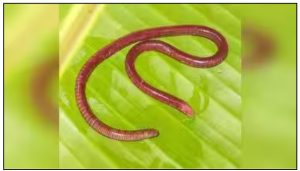
- Gegeneophis chandgadi is a newly identified subterranean, legless amphibian belonging to the caecilian group.
- Nomenclature: The species name honours the Chandgadi dialect and recognises local communities’ traditional ecological knowledge.
- Discovery: Discovered by a multi-institutional team of researchers from the Zoological Survey of India (ZSI), WRC Pune, Yashwantrao Chavan Mahavidyalaya (Halkarni), Savitribai Phule Pune University, and the Mhadei Research Centre (Goa).
- The species was discovered at Buzawade in Chandgad, Kolhapur region of Maharashtra, in the northern Western Ghats.
- Key Features
- Cryptic Diversity: The species was distinguished from morphologically similar caecilians using molecular data, morphological characters and meristic analysis.
- Habitat: It inhabits residential and agricultural landscapes, demonstrating that subterranean biodiversity persists beyond protected forest boundaries.
- Taxonomic Status: It belongs to the genus Gegeneophis under the order Gymnophiona and family Grandisoniidae.
- Significance: The discovery raises India’s Gegeneophis count to 12, with 11 Western Ghats endemics, highlighting the region’s exceptional subterranean biodiversity.
Click to Know UPSC Coaching Centres in India
Syria
Context: India and Syria recently discussed strengthening bilateral cooperation in disaster management and capacity building during a meeting in Damascus.
About Syria
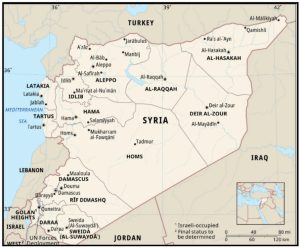
- Syria, officially the Syrian Arab Republic, is a West Asian country with important historical and civilizational links with India.
- Location: Syria lies on the eastern Mediterranean coast and shares borders with Turkey, Iraq, Jordan, Israel and Lebanon.
- Mountains: The Anti-Lebanon Mountains lie along the Lebanese border, while the Al-Ansariyyah Mountains run parallel to the Mediterranean coast. Mount Hermon (2,814 m) is the highest point.
- Rivers: The Euphrates is Syria’s major river.
- Other important rivers include the Orontes and Barada.
- Lake Assad is a major artificial reservoir formed by the Tabqa Dam.
- Climate & Vegetation: Western Syria has a Mediterranean climate supporting olive, citrus, oak and pine vegetation, while the interior has semi-arid steppes and arid desert landscapes.
- Geographical Feature: The Syrian Desert occupies much of the eastern and southern region and consists largely of rocky and gravelly terrain.
- 2023 Turkey-Syria Earthquakes: A devastating 7.8-magnitude earthquake struck near the Turkey-Syria border, followed by strong aftershocks.
- It killed an estimated 5,900 people in Syria, injured thousands, and destroyed homes, hospitals, and schools already strained by ongoing humanitarian crises
 16 Sep 2026