Subject: GS 4: Ethics
Context: Incidents of passengers stealing towels, bedsheets, blankets and other amenities from Indian Railways, despite belonging to educated and affluent sections of society, raise serious ethical concerns.
IAS coaching
Why is this an Ethical Issue?
The theft of public property is not merely a legal offence; it reflects a failure of ethical character.
- Violates integrity by creating a gap between professed values and actual conduct.
- Represents a breach of probity in the use of public resources.
- Weakens public trust in common institutions.
- Demonstrates a lack of civic responsibility towards shared assets.
Ethical Dimensions
- Greed versus Need: While theft driven by poverty may arise from survival needs, affluent individuals stealing public property reflects greed, entitlement, or moral indifference rather than necessity.
- Such behaviour demonstrates a preference for personal gain over ethical responsibility and respect for shared resources.
- Ethical Blindness: Ethical blindness occurs when individuals fail to recognise the moral wrongness of their actions, often justifying them through excuses such as “everyone does it” or “it belongs to the government.”
- These rationalisations suppress ethical judgement and gradually normalise dishonest behaviour.
- Integrity: Integrity requires consistency between one’s values and actions, regardless of whether external supervision exists. A person who preaches honesty but steals public property compromises personal character, as true integrity means doing the right thing even when no one is watching.
- Probity in Public Life: Probity signifies honesty, uprightness, and accountability in the use of public resources entrusted for the collective good. Stealing railway amenities violates these principles, increases public expenditure, and ultimately shifts the financial burden onto taxpayers.
- Public Trust: Public institutions function effectively only when citizens respect and responsibly use shared resources entrusted to them. Theft and misuse of public property increase operational costs, reduce service quality, and gradually erode public confidence in government institutions.
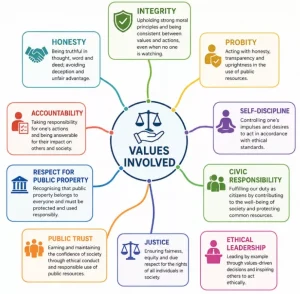 Civic Sense: Civic sense reflects a citizen’s responsibility to protect public property and use common resources with care and respect.
 -
- A lack of civic consciousness encourages the normalisation of unethical behaviour and weakens the foundations of a responsible and democratic society.
Ethical Perspectives
- Aristotle’s Virtue Ethics: According to Aristotle, virtues are cultivated through repeated good actions, while repeated unethical conduct shapes a flawed character.
- Petty theft of public property nurtures vices such as dishonesty, greed, and irresponsibility, undermining virtues like honesty, temperance, integrity, and respect for others.
- Kant’s Deontological Ethics: Immanuel Kant argued that morality is determined by adherence to duty and universal moral principles rather than by consequences.
- Stealing public property violates the moral duty to respect others’ rights and fails the test of universalisation, because if everyone acted similarly, public institutions and shared resources would cease to function effectively.
- Utilitarian Ethics (Bentham & Mill): Utilitarianism evaluates actions based on their consequences for the greatest good of the greatest number.
- Although an individual may derive a small personal benefit from stealing public property, the cumulative effect is higher public expenditure, reduced service quality, inconvenience to citizens, and diminished overall social welfare.
- Maslow’s Hierarchy of Needs: According to Maslow’s Hierarchy of Needs, human behaviour is generally motivated by the fulfilment of progressively higher human needs.
- When affluent individuals, whose physiological and safety needs are already fulfilled, engage in petty theft, the behaviour reflects greed, entitlement, and a distorted moral compass rather than necessity or psychological survival.
Is It an Ethical Dilemma?
- Not necessarily. An ethical dilemma arises when an individual faces a conflict between two or more competing moral values, making it difficult to choose the ethically appropriate course of action.
- In this case, however, right and wrong are clearly distinguishable, and there is no genuine moral conflict; the real issue is ethical blindness, where individuals fail to recognise the unethical nature of their actions and justify misconduct through rationalisation.
Impact on Society
- Economic: Theft of public property increases replacement and maintenance costs for government institutions, diverting scarce public resources from essential services and development. Ultimately, the financial burden is borne by taxpayers, reducing the efficiency of public expenditure.
- Administrative: Frequent theft disrupts the smooth functioning of public services and compels authorities to spend additional resources on surveillance, monitoring, and security measures. This reduces administrative efficiency and diverts attention from developmental priorities.
- Social: When petty theft becomes socially accepted or ignored, it normalises unethical behaviour and erodes respect for public property. Over time, it weakens civic culture, undermines social trust, and encourages similar misconduct by others.
- Moral: Such behaviour reflects a gradual decline in ethical values, integrity, and personal accountability among citizens. It also weakens the sense of collective responsibility necessary for protecting shared public resources and fostering a responsible society.
UPSC Course Fees Online
Way Forward
- Cultivate Ethical Citizenship: Value-based education should be strengthened from an early age to instill honesty, integrity, and respect for public property. Developing ethical citizenship encourages individuals to recognise that protecting common resources is both a civic duty and a moral responsibility.
- Strengthen Behavioural Interventions: Public awareness campaigns should highlight the social and economic costs of seemingly minor acts of theft. Behavioural nudges, informative messages, and public reminders in trains and public spaces can encourage responsible conduct and discourage unethical practices.
- Improve Accountability: Strict enforcement of laws against theft of public property should be complemented by transparent and accessible reporting mechanisms. Digital grievance platforms and prompt action against offenders can increase deterrence and reinforce public confidence in governance.
- Promote Ethical Leadership: Public representatives, government officials, and influential personalities should lead by example through ethical and responsible conduct. When honesty, integrity, and accountability are visibly practised and socially rewarded, they create positive behavioural norms for society.
- Build Civic Consciousness: Citizens should be continuously reminded that public property is a shared national asset, not an individual’s possession. Encouraging community participation, shared ownership, and stewardship of common resources can strengthen civic responsibility and promote responsible citizenship.
Click to Know UPSC Offline Courses
Conclusion
The theft of public property, however minor, reflects an erosion of integrity, civic responsibility, and respect for common resources. A truly ethical society is measured not only by the absence of grand corruption but also by the everyday honesty of its citizens.
 22 Jul 2026