MoSPI’s ASUSE 2025 reported strong growth in India’s unincorporated non-agricultural sector, highlighting rising employment, women entrepreneurship, digital adoption, and formal financial inclusion.
About Annual Survey of Unincorporated Sector Enterprises (ASUSE) 2025
- ASUSE is a nationwide survey capturing economic and operational characteristics of India’s unincorporated non-agricultural enterprises.
UPSC Online Preparation
About Unincorporated Sector Enterprises
- Unincorporated sector enterprises are non-corporate business units owned by individuals, households, partnerships, or self-help groups without separate legal identity.
- Features of Unincorporated Sector Enterprises
- Small-Scale Operations: Operate with limited capital, low technology, and local market orientation predominantly micro and household-based businesses.
- Proprietorship Dominance: Majority run as individual proprietorships or family enterprises with Decision-making concentrated within households.
- Labour-Intensive Nature: Depend heavily on family labour and informal workers.
- Informal and Flexible Structure: Many enterprises function without formal registration or corporate compliance.
- Flexible operations help adapt quickly to local demand conditions.
- Examples in Context of Indian Economy
- Retail and Kirana Stores: Local grocery shops and neighbourhood retail outlets dominate urban and rural markets.
- Household Manufacturing Units: Tailoring shops, garment stitching units, pottery makers, and handicraft enterprises.
- Repair and Service Enterprises: Mobile repair shops, automobile workshops, salons, and electronic repair centres.
- Food and Hospitality Units: Dhabas, tea stalls, street food vendors, and small restaurants supporting local economies.
|
- Compiled and Published By: Ministry of Statistics and Programme Implementation (MoSPI).
- Focus Areas: It covers unincorporated enterprises engaged in manufacturing, trade, and other services excluding construction activities.
- Coverage: The survey covers rural and urban India, except inaccessible villages of Andaman and Nicobar Islands.
- Parameters Studied: ASUSE assesses establishments, employment, Gross Value Added (GVA), digital adoption, registration status, assets, loans, and women participation.
- Methodology: The survey uses a multi-stage stratified sampling design and Computer Assisted Personal Interviewing (CAPI)-based data collection.
Key Findings of ASUSE 2025
- Establishment Growth: The number of establishments increased by 7.97%, rising from 7.34 crore in 2023-24 to 7.92 crore in 2025.
- Among the major states, the highest number of establishments (rural and urban combined) has been reported in Uttar Pradesh, followed by West Bengal and Maharashtra during the same period.
 Employment Expansion: The sector generated over 74.5 lakh additional jobs, increasing total employment to 12.81 crore workers during 2025.
-
- More than one-third of the workforce was concentrated in Uttar Pradesh, West Bengal and Maharashtra
- Rising Economic Output: Gross Value Added (GVA) grew by 10.87%, led by the trade sector with 16.77% growth.
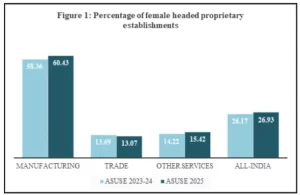
- Women Entrepreneurship: Female proprietors headed over 60% of manufacturing establishments, while women constituted nearly 29% of the total workforce.
- Nearly 72 percent of female-led hired-worker establishments engaged at least one female hired worker.
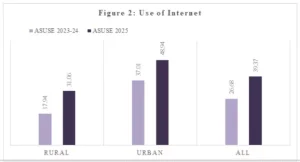 Digital Adoption: Internet usage for business purposes increased from 26.68% to 39.37%, with over 50% of traders using internet services.
- Better Financial Inclusion: Around 80% of outstanding loans came from institutional sources, reflecting greater dependence on formal credit channels.
Significance of the Findings
- Indicator of Economic Recovery: Growth in enterprises, employment, and GVA reflects resilience and sustained momentum in India’s informal economy.
- Women Empowerment: High participation of female entrepreneurs highlights expanding economic opportunities and increasing women-led enterprise activity.
- Digital Transformation: Rising internet adoption signals growing digital integration among MSMEs and informal businesses across rural and urban India.
- Financial Formalisation: Greater reliance on institutional credit indicates improving financial inclusion and reduced dependence on informal borrowing channels.
Click to Know UPSC Offline Courses
Conclusion
ASUSE 2025 highlights the growing strength of India’s informal economy as a major driver of employment, entrepreneurship, digitalisation, and inclusive economic growth.
 8 May 2026