Subject: GS 2: Polity & Governance
Context: Recently, the Bombay High Court held that a person cannot be subjected to externment merely for participating in agitations or protests against the government.
IAS coaching
About Externment

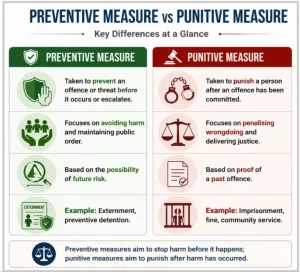
- Externment is a preventive administrative measure whereby a person is directed to leave a specified geographical area for a fixed period to prevent activities prejudicial to public order, public peace or public safety.
- Legal Basis: It is governed by State police laws, such as the Maharashtra Police Act, 1951, and is intended as a preventive—not punitive—measure.
- Objective: The power is exercised to prevent habitual offenders or persons posing an imminent threat from intimidating witnesses, disturbing public order or committing further offences.
- Nature of Power: Since externment restricts freedom of movement, residence and livelihood, it must satisfy the tests of necessity, proportionality and procedural fairness.

Key Observations of the Bombay High Court
- Peaceful Protest is Not a Crime: Organising morchas, dharnas and peaceful demonstrations against government policies cannot by itself justify externment.
- Criticism of Government is Constitutionally Protected: Raising slogans against ruling governments or political leaders does not amount to a threat to public order merely because they are politically critical.
- Protection of Fundamental Rights: Arbitrary externment infringes the constitutional guarantees of free speech, personal liberty, dignity and democratic participation under Articles 19 and 21.
- Police Must Remain Institutionally Neutral: The Court emphasised that police officers are servants of the Constitution and the law, not of any political executive, reinforcing the principle of political neutrality in policing.
- Externment Requires Genuine Public Order Concerns: Preventive powers cannot be invoked merely because an individual opposes government decisions unless there is credible evidence of imminent threat to public peace.
Significance of the Judgment
- Strengthens Democratic Dissent: Reaffirms that peaceful disagreement with government policies is an essential feature of a constitutional democracy.
- Limits Executive Overreach: Prevents misuse of preventive police powers for suppressing political opposition or civil society activism.
- Reinforces Rule of Law: Ensures that preventive measures are exercised only within constitutional and statutory limits.
- Protects Political Freedoms: Safeguards the functioning of opposition parties, activists, civil society organisations and citizens exercising democratic rights.
- Promotes Accountable Policing: Reinforces the expectation that police exercise statutory powers impartially and independently of political considerations.
Click to Know UPSC Coaching Centres in India
| Constitutional Protection of Dissent:
The freedom to move freely throughout the territory of India is a fundamental right guaranteed to all Indian citizens under Article 19(1)(d) of the Constitution.
- Article 19(1)(a): Guarantees the freedom of speech and expression, including the right to criticise government policies peacefully.
- Article 19(1)(b): Protects the right to assemble peacefully and without arms, forming the constitutional basis for peaceful protests and demonstrations.
- Article 19(1)(c): Ensures the right to form associations and political organisations, strengthening democratic participation.
- Article 21: Protects the right to life, personal liberty and dignity, which cannot be curtailed through arbitrary executive action.
- Reasonable Restrictions: While Article 19 permits restrictions on grounds such as public order, sovereignty, security and morality, such restrictions must remain reasonable, proportionate and legally justified.
|