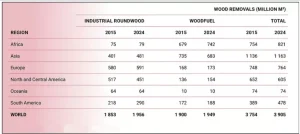
The Global Forest Goals Report 2026 warned that rising fuelwood and charcoal demand is accelerating forest degradation across Africa and Asia.
Key Highlights of Global Forest Goals Report 2026
- Global Forest Loss: Global forest cover declined from 4.18 billion hectares in 2015 to 4.14 billion hectares in 2025, recording a net annual loss of 4.12 million hectares.
- Regional Decline: South America witnessed the highest annual forest loss of about 4.1 million hectares, while Africa lost nearly 3 million hectares annually during the decade.
- Fuelwood Pressure: The report identified rising dependence on fuelwood and charcoal as a major driver of forest degradation, especially in sub-Saharan Africa and parts of Asia.
- Primary Forest Erosion: The world lost nearly 16 million hectares of primary forests between 2015 and 2025, threatening biodiversity and carbon storage capacity.
- Restoration Gap: Although 91 countries pledged to restore 190 million hectares of forests, only 44 million hectares had been restored by 2025, with Asia showing the highest progress.
UPSC Online Classes
India’s Forest Cover and Goal
- Forest and Tree Cover: The India State of Forest Report (ISFR) 2023 recorded a total forest and tree cover of 827,357 sq km, constituting 25.17% of India’s geographical area.
- Target: India’s official national target is to maintain at least 33% of its total geographical area under forest and tree cover to ensure ecological stability, as outlined in the National Forest Policy (1988).
- Key Government Initiatives: Major initiatives include the Green India Mission (GIM), National Afforestation Programme, and Compensatory Afforestation Fund Management and Planning Authority (CAMPA) for afforestation and ecosystem restoration.
- Significance: These measures support climate change mitigation, biodiversity conservation and sustainable forest management while promoting long-term ecological security.
|
About Global Forest Goals Report 2026
- The Global Forest Goals Report 2026 is a United Nations assessment report evaluating global progress towards achieving the Global Forest Goals (GFGs) by 2030.
- Released By: The report was prepared by the United Nations Department of Economic and Social Affairs (UNDESA) and the United Nations Forum on Forests (UNFF) Secretariat.
- Objective: It assesses trends in forest conservation, sustainable forest management, restoration efforts and challenges affecting global forest ecosystems.
- Significance: The report serves as an important global policy framework for addressing deforestation, biodiversity loss, climate change and sustainable development goals (SDGs).
Implications of Declining Global Forests
- Climate Stress: Declining forests weaken global carbon sinks, intensifying climate change, heatwaves, droughts and extreme weather events.
- Biodiversity Threat: Loss of primary forests threatens endemic species, ecological balance and critical ecosystem services such as pollination and water regulation.
- Energy Poverty Link: Heavy dependence on fuelwood reflects inadequate access to clean energy and highlights the connection between poverty and environmental degradation.
- Governance Challenges: Weak forest governance, illegal logging, insecure land tenure and limited institutional capacity continue to hinder sustainable forest management.
Click to Explore UPSC Offline Coaching
Way Forward
- Clean Energy Access: Expanding affordable clean cooking and energy alternatives can reduce dependence on fuelwood and charcoal.
- Sustainable Supply Chains: Countries must promote deforestation-free agricultural and industrial supply chains to reduce pressure on forests.
- Financial Support: Increased climate finance and investments are needed for afforestation, restoration and community-based forest management programmes.
- Stronger Coordination: The report emphasises better coordination among governments, local communities, international organisations and private stakeholders for achieving the Global Forest Goals by 2030.
 14 May 2026