Scientists have discovered nearly 500 Ultra-conserved elements (UCEs) in the genomes of humans, rats, and mice—completely unchanged for 80 million years since their last common ancestor.
What are UCEs?
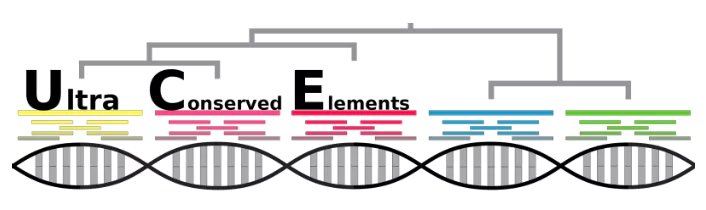
- Ultra-conserved elements (UCEs) are stretches of DNA that are highly conserved across different species, meaning they have remained nearly identical for hundreds of millions of years of evolution.
- Discovery: UCEs were first identified in 2004 by comparing the genomes of humans, mice, and rats.
- Definition: They are typically at least 200 base pairs long and show 100% sequence identity across different species.
- Location: UCEs are found in both coding and non-coding regions of the genome, often near genes involved in development and regulation.
How UCEs Regulate Protein Levels?
- UCE in the Tra2b gene of mice plays a crucial role in controlling the production of the Tra2β protein.
- When the researchers deleted the UCE in mouse testes, the animals overproduced Tra2β, leading to the death of sperm-producing cells and infertility.
- This suggests that any mutation in this UCE that disrupts its function would prevent the mouse from reproducing.
Tra2b Gene
- The Tra2b (Transformer-2 beta) gene encodes the Tra2β protein, a key regulator of RNA splicing.
- RNA splicing is the process by which introns are removed and exons are joined to form mature mRNA.
Role in RNA Splicing
- The Tra2β protein helps regulate alternative splicing, ensuring that genes produce the correct mRNA variants for different cell types and conditions.
- It is particularly important in tissues where precise splicing control is needed, such as the testes, brain, and embryonic cells.
The Connection to Ultra-Conserved Elements (UCEs)
- A highly conserved UCE is embedded in the first intron of the Tra2b gene.
- This UCE functions as a poison exon, preventing excessive production of the Tra2β protein.
|
Key Features of UCEs
- Extreme Conservation: UCEs show near-identical sequences across distantly related species, suggesting strong selective pressure.
- Functional Importance: Many UCEs are located in non-coding regions, often near genes involved in development and regulatory processes.
- Evolutionary Significance: Their presence in multiple lineages makes them useful for phylogenetic studies and comparative genomics.
- Genomic Locations: UCEs are found in introns, intergenic regions, and sometimes within protein-coding genes.
Applications of UCEs
- Phylogenetics & Systematics: UCEs serve as powerful markers for reconstructing evolutionary relationships between species.
- Comparative Genomics: Studying UCEs can reveal conserved regulatory elements and potential functions.
- Human Disease Research: Some UCEs are linked to essential biological processes and may play roles in disease susceptibility.
 26 Feb 2025