GS III: Indian Economy and issues relating to planning, mobilization of resources, growth, development, and employment.
Context: In his 80th Independence Day address, the Indian Prime Minister placed technology and innovation at the centre of India’s development strategy, highlighting emerging technologies, AI skilling and digital public infrastructure.
Key Announcements
- Emerging Technologies: Focus on AI, quantum computing, space, robotics and data centres as new growth frontiers.
- Digital Public Technologies: India aims to build on the success of UPI and Digital Public Infrastructure and emerge as a leader in digital public technologies.
- 6G Leadership: Emphasis on Made-in-India 6G and next-generation communication technologies reaching every part of the country.
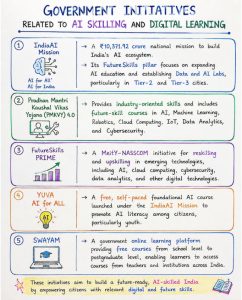
- AI Skilling: Target to provide AI skill training to 1 crore youth within one year, preparing them for the AI-driven economy.
- Free Online Coaching: Proposal to provide free online coaching for competitive examinations using India’s digital infrastructure and teaching talent.
Best Online Coaching for UPSC
Why AI Skilling Matters
- Future of Work: AI is transforming employment patterns, skills and productivity.
- Skill Mismatch: Traditional education may not adequately meet emerging industry requirements.
- Youth Employment: AI skills can improve employability and entrepreneurship.
- Productivity: AI adoption can enhance efficiency across agriculture, healthcare, manufacturing and services.
- Global Competitiveness: A skilled workforce can strengthen India’s position in the global digital economy.
Significance for Viksit Bharat
- Demographic Dividend: Converts India’s large youth population into a skilled workforce.
- Inclusive Growth: Expands access to education, employment and technological opportunities.
- Human Capital: Strengthens India’s most important long-term asset — its people.
- Innovation Economy: Supports transition towards a knowledge- and technology-driven economy.
- Social Mobility: Affordable coaching can improve access to competitive examinations and public-sector opportunities.
- Technological Sovereignty: AI and 6G capabilities can strengthen India’s strategic and economic autonomy.
Concerns & Challenges

- Digital Divide: Unequal access to devices, internet connectivity and digital infrastructure may exclude vulnerable groups.
- Quality of Training: Large-scale skilling must ensure industry-relevant and practical skills, not merely certification.
- Faculty Capacity: AI education requires adequate trained instructors and mentors.
- Employability Gap: Training must translate into jobs, entrepreneurship and measurable outcomes.
- Language Barrier: AI and online learning resources need greater availability in Indian languages.
- Online Coaching Quality: Free platforms must ensure content quality, doubt resolution, assessment and personalised guidance.
- AI Ethics: Youth must also understand privacy, bias, misinformation, cybersecurity and responsible AI use.
Way Forward
- Outcome-Based Skilling: Measure success through employment, entrepreneurship and skill utilisation, rather than enrolment numbers.
- Industry Partnerships: Integrate industry, universities and technology firms into curriculum design and training.
- Digital Inclusion: Strengthen affordable internet, devices and digital infrastructure for disadvantaged students.
- Multilingual Content: Expand high-quality learning resources in regional languages.
- Blended Learning: Combine online platforms with physical mentoring and skill centres.
- AI Literacy: Introduce AI awareness across education, including ethics, critical thinking and responsible use.
- Continuous Upskilling: Create opportunities for lifelong learning and reskilling as technologies evolve.
- Public Digital Platforms: Use DPI to create open, interoperable and scalable education and skilling ecosystems.
Click to Know UPSC Offline Courses
Conclusion
The twin focus on AI skilling and free digital coaching seeks to make technology an instrument of both economic competitiveness and social inclusion. The real measure of success will be whether India can move from digital access to meaningful skills, employment and innovation, making its youth active contributors to Viksit Bharat@2047.