UPSC PYQs

Prelims, Mains & Optional PYQs

UPSC Notes

Comprehensive & Short Notes

Macroeconomic Stabilisation: Nobel Prize 2026 and India’s Policy

Macroeconomic Stabilisation: Nobel Prize 2026 and India’s Policy 14 Oct 2026

Macroeconomic Stabilisation: Nobel Prize 2026 and India’s Policy

GS Paper III: Indian Economy and issues relating to planning, mobilization of resources, growth, development, and employment.

Context: The 2026 Prize in Economic Sciences was awarded to Robert E. Hall and Michael Woodford for developing macroeconomic models that have improved the understanding of economic fluctuations and the design of stabilisation policies.
About Macroeconomic Stabilisation

Macroeconomic Stabilisation

  • Meaning: Macroeconomic stabilisation involves using monetary and fiscal policies to reduce excessive fluctuations in output, employment and inflation.
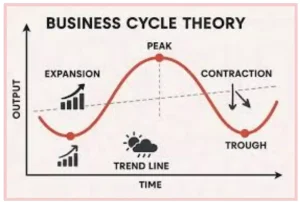
  • Business Cycle: Economic activity moves through periods of expansion and slowdown, requiring policies suited to the nature of each shock.
  • Limitations of Traditional Models: The experience of stagflation in the 1970s, when inflation and unemployment rose together, demonstrated that economic outcomes cannot always be explained by simple relationships.

UPSC Course Fees Online

Major Contributions

  • Consumption and Expectations: Robert E. Hall’s work highlighted the role of expected future income in household consumption decisions. However, liquidity constraints and limited access to credit prevent many low-income households from smoothing consumption over time.
  • Microeconomic Foundations: The research emphasises that macroeconomic outcomes emerge from the decisions of individual households and firms, whose circumstances and expectations differ.
  • Sticky Prices: Firms may adjust prices gradually because of contracts, adjustment costs and expectations about future demand and costs.
  • Forward Guidance: Michael Woodford’s work helped establish the importance of central-bank communication. Clear signals about the likely future path of monetary policy can influence present consumption, investment and inflation expectations.

Significance for India

  • Monetary Policy: The Reserve Bank of India (RBI) can use communication and policy guidance to shape inflation expectations and improve policy transmission.
  • Inclusive Policymaking: Differences in income, savings and credit access mean that interest-rate changes affect households and businesses differently.
  • Inflation Management: Understanding expectations helps policymakers distinguish demand-driven inflation from supply-side shocks.
  • Evidence-Based Decisions: Economic models can improve forecasting, provided they account for India’s structural conditions and the limits of available data.

Major Challenges

  • Supply-Side Inflation: Interest-rate changes cannot directly resolve shortages caused by crop failures, weather disruptions or supply-chain bottlenecks.
  • Unequal Credit Access: Poor households and small firms may not benefit from lower interest rates if they lack access to formal credit.
  • Uncertain Expectations: Global shocks, geopolitical tensions and sudden price changes can weaken the reliability of forecasts.
  • Policy Coordination: Monetary policy alone may be insufficient when inflation arises from structural supply constraints.

Way Forward

  • Improve Policy Communication: RBI should provide clear, consistent explanations of its decisions and inflation outlook.
  • Strengthen Data and Forecasting: Use timely data on consumption, employment, prices and credit conditions to improve policy design.
  • Coordinate Monetary and Fiscal Policy: Combine price stability measures with targeted fiscal support and supply-side interventions where appropriate.
  • Adopt Inclusive Approaches: Account for differences in income, savings and borrowing capacity when assessing policy impacts.

Click to Explore UPSC Offline Coaching

Conclusion

Effective stabilisation requires more than changing interest rates; it depends on understanding economic expectations, household and business behaviour, and the nature of economic shocks.

Check Out UPSC CSE Books

Visit PW Store

online store 1

Macroeconomic Stabilisation: Nobel Prize 2026 and India’s Policy

Need help preparing for UPSC or State PSCs?

Connect with our experts to get free counselling & start preparing

Free Counselling for UPSC Aspirants

Connect with our experts and take the right next step.

Expert Guidance
Personalized Strategy
100% Free

Book Your Free Session

NEED ASSISTANCE?

Request a Callback

Our counsellor will connect with you and help you choose the right course and centre.

  • Expert Guidance
  • Course & Fee Information
  • Quick Callback Support

Request a Callback

Books
UPSC PYQs
UPSC Notes
Current Affairs
Quick Revise Now !
AVAILABLE FOR DOWNLOAD SOON
UDAAN PRELIMS WALLAH
Comprehensive coverage with a concise format
Integration of PYQ within the booklet
Designed as per recent trends of Prelims questions
हिंदी में भी उपलब्ध
Quick Revise Now !
UDAAN PRELIMS WALLAH
Comprehensive coverage with a concise format
Integration of PYQ within the booklet
Designed as per recent trends of Prelims questions
हिंदी में भी उपलब्ध

<div class="new-fform">


    </div>

    Subscribe our Newsletter
    Sign up now for our exclusive newsletter and be the first to know about our latest Initiatives, Quality Content, and much more.
    *Promise! We won't spam you.
    Yes! I want to Subscribe.