Subject: GS 3: Security
Context: The Nuclear Power Corporation of India Limited (NPCIL) has clarified that the recent data breach reported at the Kudankulam Nuclear Power Plant (KKNPP) did not compromise any nuclear safety or security systems, as the leaked information pertains only to conventional Balance of Plant (BoP) facilities.
UPSC Coaching Classes
About the Balance of Plant (BoP)
- The BoP comprises all non-nuclear auxiliary systems required for operating a power plant, excluding the nuclear reactor and associated safety systems.
- Components: It includes water supply and treatment systems, electrical substations, cooling systems, buildings, roads, fire protection systems, compressed air systems and other common utility infrastructure.
- Role: While BoP infrastructure supports the functioning of the power plant, it does not perform any nuclear safety or reactor protection functions.
Current Status of Nuclear Energy and Power Plants in India:
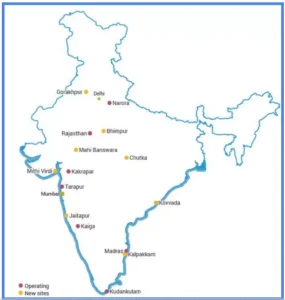
- Operational Capacity: India currently operates 24 nuclear power reactors across 7 sites, with a total installed capacity of 8.78 GW.
- Expansion Underway: 10 additional reactor units with a combined capacity of 8,000 MW (8 GW) are under construction, reflecting the country’s ongoing expansion of nuclear power generation.
- Reactor Types: India’s nuclear fleet comprises Pressurised Heavy Water Reactors (PHWRs), Boiling Water Reactors (BWRs), and Light Water Reactors (LWRs).
- Fuel Base: Natural uranium is the primary fuel used in PHWRs, which constitute the backbone of India’s nuclear power programme.
- Strategic Importance: The Government aims to expand nuclear energy to enhance energy security, reduce dependence on fossil fuels, and support low-carbon economic growth.
|
Click to Know UPSC OnlyIAS Coaching Centres
About Kudankulam Nuclear Power Plant (KKNPP)
- Location: Situated at Kudankulam in Tirunelveli district, Tamil Nadu.
Operator: Owned and operated by the Nuclear Power Corporation of India Limited (NPCIL) under the Department of Atomic Energy (DAE).
- International Collaboration: Developed under the India–Russia Civil Nuclear Cooperation Programme with technical collaboration from Rosatom (Russia).
- Reactor Technology: Uses VVER-1000 Pressurised Water Reactors (PWRs), a Generation III+ reactor technology incorporating advanced passive and active safety features.
- Capacity: Planned to have six units of 1,000 MW each, with a total installed capacity of 6,000 MW.
- Current Status: Units 1 and 2 are operational; Units 3 and 4 are under construction and expected to be commissioned by 2027, while Units 5 and 6 are under various stages of implementation.