GS 3: Science & Technology
Context: Recent incidents involving compromise of Indian CCTV networks and disruption of digital services have raised concerns about India’s dependence on foreign-controlled digital infrastructure and the need for digital and technological sovereignty.
Best Online Coaching for UPSC
Recent Concerns Highlighting Digital Dependence
- CCTV Network Vulnerability: Reports of Indian CCTV networks being compromised highlighted risks of dependence on foreign-origin surveillance software.
- Use of platforms such as EseeCloud raised concerns regarding access to sensitive information related to strategic assets.
- Nayara Energy Digital Disruption (2025)
- Nayara Energy faced disruption of access to corporate email, collaboration tools and cloud data.
- The issue exposed vulnerability created by reliance on foreign technology providers and global regulatory decisions.
IAS coaching
About Digital Sovereignty
- Digital sovereignty refers to the ability of a country to control, secure and independently operate its critical digital infrastructure, data and technologies without excessive dependence on external actors.
- It includes Data control, Indigenous technology capability, Cyber security, Secure digital infrastructure and Strategic autonomy.
Why Foreign Dependence Create Risks?
- Strategic Vulnerability: Dependence on foreign-owned digital platforms for critical systems such as cloud infrastructure, authentication systems and defence software creates strategic risks.
- For example, the Nayara Energy digital disruption (2025) highlighted how access to essential digital tools can be affected by decisions taken by foreign technology providers.
- Threat to National Security: Modern warfare is increasingly software-defined, where control over codes, algorithms and digital systems influences military capabilities. Dependence on foreign defence technologies can create risks for weapons systems, satellites, communication networks and intelligence platforms.
- For example, limitations faced by India in accessing advanced GPS support during the Kargil War (1999) highlighted the need for indigenous capabilities.
- Risk of External Control: Foreign companies operating critical technologies may have to follow the policies and laws of their home countries, creating risks of technology denial or restrictions.
- For instance, enforcement of EU sanctions by Microsoft affecting Nayara Energy demonstrated how external regulatory decisions can impact Indian entities.
- Economic Disruption: Dependence on foreign digital platforms can disrupt business operations, trade and industrial activities if access is restricted.
- For example, denial of access to cloud services, enterprise software or communication tools can affect daily operations of companies and institutions.
- Disruption of Government Services: Government departments increasingly rely on digital infrastructure for administration and public service delivery. Excessive dependence on foreign platforms may create risks to e-governance systems, official communication and critical services during geopolitical conflicts.
- Data Sovereignty Concerns: Even when data is stored within India, foreign companies may remain subject to the laws of their home countries, allowing possible external access.
- For example, dependence on foreign cloud providers raises concerns about control over government, defence and commercial data.
- Cybersecurity Risks: Foreign-origin technologies can increase exposure to cyberattacks, surveillance and data breaches.
- For example, reports of Indian CCTV networks being compromised through vulnerable foreign software platforms highlighted risks associated with imported digital systems.
- Loss of Technological Autonomy: Excessive reliance on foreign technologies can weaken India’s digital sovereignty and strategic independence.
- Examples like India’s development of NavIC after GPS-related challenges and indigenous platforms such as UPI and RuPay show the importance of building domestic alternatives.
Global Trend Towards Digital Sovereignty
- France plans to move government departments towards sovereign communication platforms.
- The European Union is reducing dependence on American technology through independent cloud and IT infrastructure.
- Countries such as the Netherlands, Denmark and Türkiye are exploring domestic alternatives.
Measures Taken by India to Strengthen Digital & Technological Sovereignty
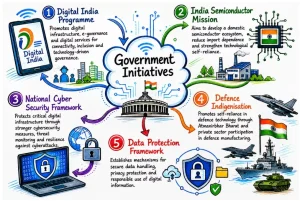
- Development of Indigenous Technologies: India is developing domestic capabilities in satellite navigation, semiconductors and indigenous digital platforms to reduce foreign dependence.
- Building Digital Public Infrastructure: Success of UPI and RuPay demonstrates India’s ability to create globally competitive indigenous digital systems.
- Defence Self-Reliance: India is promoting indigenous defence production and private-sector participation to reduce reliance on foreign defence technologies.
Example: Advanced Medium Combat Aircraft (AMCA) development framework.
- International Technology Partnerships: India is collaborating with trusted partners to develop critical technologies while maintaining strategic autonomy.
Examples: BrahMos missile programme with Russia and semiconductor cooperation with the U.S.
- Need to Increase R&D Investment: India’s R&D expenditure remains low at around 0.74% of GDP compared to the global average of 2.07%, limiting innovation capacity and technological self-reliance.
UPSC Course Fees Online
India’s Challenges in Achieving Digital and Technological Sovereignty
- Low R&D Investment: India’s research and development (R&D) expenditure remains lower compared to global technology leaders, limiting the country’s ability to develop indigenous innovations and cutting-edge technologies.
- This affects progress in areas such as AI, semiconductors, defence technology and advanced computing.
- Dependence on Foreign Technology: India continues to rely heavily on foreign technologies in critical sectors such as semiconductors, cloud computing, operating systems, AI infrastructure and advanced defence systems.
- This dependence creates vulnerabilities regarding technology access, data security and strategic autonomy.
- Limited Semiconductor and Hardware Capability:India has strong capabilities in software services but remains dependent on imports for advanced chips and electronic components.
- Lack of domestic semiconductor manufacturing capacity affects digital infrastructure, electronics production and national security.
- Weak Private Sector Defence Ecosystem: Defence innovation has traditionally been dominated by public-sector organisations, resulting in limited private-sector participation.
- This has slowed the development of advanced defence platforms, indigenous systems and military technologies.
- Innovation and Industry-Academia Gap: Limited collaboration between universities, research institutions and industries reduces the conversion of scientific research into commercial technologies and globally competitive products.
- Cybersecurity and Digital Infrastructure Gaps: Growing digitalisation has increased exposure to cyber threats, data breaches and critical infrastructure attacks, requiring stronger indigenous cybersecurity capabilities.
- Talent Utilisation Challenges: Although India has a large pool of technology professionals, gaps remain in advanced research, specialised skills and retaining high-end talent for strategic technology development.
- Global Technology Competition: India faces intense competition from countries leading in AI, quantum computing, semiconductors and digital platforms, making rapid investment and innovation essential for maintaining strategic relevance.
Way Forward
- Strengthen Indigenous R&D: India needs to increase its research and development (R&D) expenditure to global standards and promote collaboration between universities, industries and government institutions.
- This will enhance innovation in areas such as AI, semiconductors, cybersecurity and defence technologies.
- Build Sovereign Digital Infrastructure: India should develop indigenous capabilities in critical digital sectors such as cloud computing, cybersecurity, AI systems, data storage and authentication platforms.
- Building reliable domestic alternatives will reduce dependence on foreign technology providers.
- Encourage Public-Private Partnerships: The defence and technology sectors require greater participation from private companies to promote innovation and competition.
- The government should support this through research funding, assured procurement, favourable policies and technology partnerships.
- Promote Trusted International Partnerships: Complete technological self-reliance may not be practical in a globally interconnected economy.
- India should build partnerships with trusted countries for semiconductor development, defence technology cooperation and resilient supply chains while maintaining strategic autonomy.
- Create Strong Data Governance Framework: India needs robust data protection and governance mechanisms to safeguard citizens’ and national data. Clear rules should be established regarding foreign access, storage and control of critical information.
- Develop Indigenous Semiconductor Ecosystem: India must strengthen domestic capabilities in chip design, manufacturing and packaging to reduce dependence on imported semiconductors and support digital and defence industries.
- Enhance Cybersecurity Capabilities: Strengthening cyber defence systems, indigenous security solutions and critical infrastructure protection is essential to prevent cyberattacks and safeguard national interests.
- Promote Digital Public Infrastructure Model: India can expand the success of platforms like UPI and RuPay to other sectors such as cloud services, digital identity, e-commerce and governance platforms to create secure and scalable digital ecosystems.
Click to Know UPSC Coaching Centres in India
Conclusion
Digital sovereignty is not about isolation from global technology but about ensuring strategic control, resilience and choice. For India, achieving technological sovereignty is essential for protecting national security, economic growth and strategic autonomy in an increasingly competitive global order.
 23 Jun 2026