Recently, India and Norway upgraded bilateral ties to a “Green Strategic Partnership” focusing on green shipping, blue economy, energy transition and sustainable development.
- PM Narendra Modi was awarded the Grand Cross of the Royal Norwegian Order of Merit by His Majesty King Harald V of Norway.
UPSC Online Preparation
Key Highlights of India–Norway Meet
- Green Strategic Partnership: India and Norway elevated bilateral relations to a “Green Strategic Partnership” to deepen cooperation in climate-friendly technologies, renewable energy and sustainable maritime development.
- Cooperation in Blue Economy and Green Shipping: India and Norway agreed to expand cooperation in green shipping, maritime innovation, ocean economy, clean fuels and sustainable port infrastructure.
- Strategic and Geopolitical Coordination: Both sides reaffirmed support for a rules-based international order, peaceful diplomacy and multilateral cooperation amid geopolitical conflicts in Ukraine and West Asia.
India–Norway Relations
- India and Norway share cordial bilateral relations based on democratic values, multilateral cooperation, sustainable development and growing economic engagement.
- Historical Origin: Diplomatic relations were established in 1947 soon after India’s independence, and Norway was among the first countries to recognise sovereign India.
- Strategic and Diplomatic Cooperation: Both countries support a rules-based international order, peaceful conflict resolution, climate action, counter-terrorism cooperation and reforms in global institutions such as the United Nations Security Council.
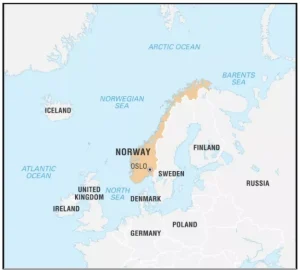 Economic and Trade Relations: Bilateral trade between India and Norway stands at roughly USD 1 billion annually, with a relatively balanced exchange of goods and services. Economic and Trade Relations: Bilateral trade between India and Norway stands at roughly USD 1 billion annually, with a relatively balanced exchange of goods and services.-
- Bilateral trade has expanded in sectors such as renewable energy, shipping, maritime technology, fertilisers, telecommunications and clean energy, strengthened further through the India-EFTA Trade and Economic Partnership Agreement (TEPA).
- Maritime and Green Partnership: India and Norway cooperate extensively in green shipping, blue economy, Arctic research, offshore energy, sustainable fisheries and maritime innovation under the recently upgraded Green Strategic Partnership.
- Cultural and Educational Linkages: Norway hosts an Indian diaspora of around 30,000 people, while Indian students, cultural associations and festivals such as Turban Day and Oslo Colour Festival strengthen people-to-people ties.
|
About Green Shipping
- Green shipping refers to environmentally sustainable maritime transport practices aimed at reducing greenhouse gas emissions, marine pollution and fossil fuel dependence in the shipping sector.
- Key Features of Green Shipping
- Use of Cleaner Marine Fuels: Green shipping promotes alternative fuels such as green hydrogen, ammonia, methanol, LNG and biofuels to reduce carbon emissions from ships.
- Energy-Efficient Vessel Design: Modern green ships use advanced hull designs, wind-assisted propulsion, battery systems and fuel-efficient engines to improve energy efficiency.
- Reduction of Marine Pollution: Green shipping emphasises reduction of oil spills, ballast water pollution, underwater noise pollution and plastic waste affecting marine ecosystems.
- Adaptations for Green Shipping
- Shore-to-Ship Electrification: Ports increasingly provide shore power facilities allowing ships to switch off diesel engines while docked.
- Smart and Digital Navigation: Use of Artificial Intelligence, IoT and digital route optimisation reduces fuel consumption and operational inefficiencies.
- Transition to Net-Zero Shipping: Shipping companies are adopting carbon-neutral technologies and complying with International Maritime Organization (IMO) decarbonisation targets.
Indian Government Initiatives Supporting Green Shipping and Blue Economy
- Sagarmala Programme (2015): Sagarmala aims to modernise ports, improve coastal infrastructure, promote coastal shipping and enhance logistics efficiency.
- Maritime India Vision 2030 (2021): The vision document promotes green ports, renewable energy integration, digital maritime infrastructure and sustainable coastal development.
- Harit Sagar Green Port Guidelines (2023): The Ministry of Ports, Shipping and Waterways launched “Harit Sagar” guidelines to reduce carbon emissions and promote eco-friendly port operations.
- The initiative aims to reduce carbon emissions per ton of cargo handled by 30% by 2030 and 70% by 2047
- National Green Hydrogen Mission (2023): The mission supports production and use of green hydrogen and green ammonia, including their future application in shipping and maritime transport.
- Blue Economy Policy Framework: India promotes sustainable utilisation of ocean resources through fisheries development, marine biotechnology, offshore renewable energy and coastal tourism.
- Deep Ocean Mission (2021): The mission focuses on deep-sea exploration, marine biodiversity research and sustainable use of ocean resources.
- Green Tug Transition Programme (2024): India launched the Green Tug Transition Programme to replace conventional fuel-based harbour tugs with green and hybrid propulsion systems.
Importance of Blue Economy for India
- Maritime Resource Utilisation: India’s vast coastline and Exclusive Economic Zone provide opportunities in fisheries, offshore energy, seabed minerals and marine trade.
- Sustainable Economic Growth: The blue economy supports employment generation, food security, renewable energy and coastal livelihoods through sustainable marine resource management.
- Strategic Maritime Security: Development of maritime infrastructure strengthens India’s role in the Indian Ocean Region and global supply chains.
Click to Know UPSC Offline Courses
Conclusion
India–Norway cooperation reflects the growing importance of sustainable maritime development, green technology and blue economy partnerships in the global climate transition.
 19 May 2026