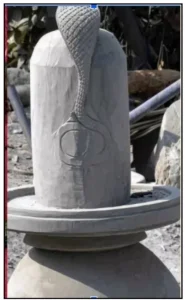
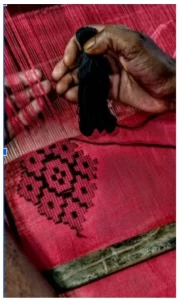
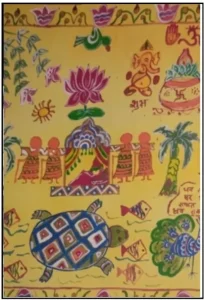
Three traditional products of Bihar Bawan Buti Saree and Fabric, Patharkatti Stone Craft and Pidhiya Painting have recently received the Geographical Indication (GI) Tag.
UPSC Online Courses
About Bawan Buti Saree and Fabric (Nalanda)

- Bawan Buti is a unique handloom textile tradition of Bihar known for weaving symbolic motifs directly into the fabric.
- Origin: The craft is primarily practised in Baswan Bigha village and surrounding areas of Nalanda district.
- Key Features
-
- Fifty-Two Traditional Motifs: The fabric incorporates 52 (Bawan) Buddhist, cultural and traditional motifs, giving the craft its distinctive identity.
- Handloom-Based Weaving: The sarees and fabrics are produced using traditional handlooms, preserving centuries-old weaving techniques.
- Cultural Heritage: The motifs depict themes associated with Buddhism, local traditions and the rich cultural heritage of Bihar.
About Patharkatti Stone Craft (Gaya)
- Patharkatti Stone Craft is a renowned stone-carving tradition famous for its intricate sculptures and artistic excellence.
Origin: The craft originated in Patharkatti village of Gaya district and has flourished for nearly 300 years.
- Key Features
- Black Granite Craftsmanship: Artisans create sculptures from locally available black granite stone known for its durability and fine texture.
- Religious Sculptures: The craft is widely recognized for statues of Lord Buddha, Lord Mahavira, Hindu deities and other artistic figures.
- Historical Significance: Local tradition holds that granite from Patharkatti was used in the construction of the Vishnupad Temple, Gaya.
About Pidhiya Painting (Bhojpur)
- Pidhiya Painting is a traditional folk-art form that reflects the social and cultural life of rural Bihar.
Origin: The art form is predominantly practised by women in the Bhojpur region of Bihar.
- Key Features
- Festival-Based Tradition: The paintings are traditionally created during festivals, rituals and important social occasions.
- Use of Natural Colours: Artists employ natural colours and traditional symbols to create vibrant visual narratives.
- Depiction of Rural Life: The paintings portray family relationships, religious beliefs, folk traditions and everyday village life.
With the inclusion of these three products, Bihar’s total number of Geographical Indication (GI)-tagged products has officially risen to 16
| Category |
GI Products |
| Agricultural Products (6) |
Mithila Makhana, Shahi Litchi, Bhagalpuri Zardalu Mango, Katarni Rice, Marcha Rice, Magahi Paan |
| Handicrafts & Art Forms (7) |
Madhubani Painting, Sujini Embroidery, Sikki Grass Products, Applique (Khatwa) Work, Manjusha Art, Patharkatti Stone Craft, Pidhiya Painting |
| Textiles & Clothing (2) |
Bhagalpuri Silk, Bawan Buti Saree and Fabric |
| Foodstuff (1) |
Silao Khaja |
Click to Know UPSC Coaching Centres in India
About Geographical Indication (GI) Tag
- A Geographical Indication (GI) is an intellectual property right that identifies a product as originating from a specific geographical area possessing unique qualities or reputation.
- Provided By: GI registration in India is granted by the Geographical Indications Registry, Chennai, under the Department for Promotion of Industry and Internal Trade (DPIIT), Ministry of Commerce and Industry.
- Legal Basis: The GI framework is governed by the Geographical Indications of Goods (Registration and Protection) Act, 1999, which came into force in 2003.
- Global Recognition: The GI system is recognized internationally under the World Trade Organization Agreement on Trade-Related Aspects of Intellectual Property Rights (TRIPS).
- Validity: A registered GI receives legal protection for 10 years and can be renewed indefinitely for successive ten-year periods.