Discovery of a New Genetic Code in Antarctic Archaea

7 Jan 2026

Discovery of a New Genetic Code in Antarctic Archaea

A study published in the journal Science reports a major breakthrough in molecular biology by demonstrating the existence of a previously unrecognised genetic code operating in certain archaea.
What is Archaea ?

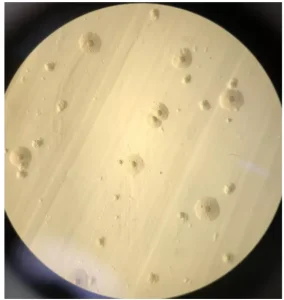
  • Definition: Archaea are single-celled microorganisms that resemble bacteria in their size and shape.
  • Archaea are often found in extreme environmental conditions, which is why many of them are classified as extremophiles.
    • ArchaeaSome species also inhabit moderate environments, including the human gut.
    • For instance, environments include Antarctic lakes with extremely low temperatures as well as the human digestive system, such as the human gut.
  • Significance: Their ability to survive under extreme physical and chemical conditions makes archaea important models for studying evolutionary adaptation at the molecular level.

Characteristics

  • Archaea (singular: archaeon) are primitive, single-celled microorganisms.
  • They lack a nucleus and membrane-bound organelles, similar in size and shape to bacteria.
  • Despite physical similarities, they are biochemically and genetically distinct from bacteria.
  • Their cell membranes contain unique lipids, and most species possess a cell wall.
  • Growth and Cultivation: Generally slow-growing organisms.
    • Extremely difficult to culture in laboratories due to challenges in replicating their natural living conditions.

About Genetic Code

  • The genetic code refers to the set of rules by which the sequence of DNA nucleotides is translated into a sequence of amino acids during protein synthesis.
    • DNA is made up of four nitrogen-containing bases: adenine (A), guanine (G), cytosine (C), and thymine (T).
    • Triplet codon: Each amino acid is encoded by a triplet codon, which is a sequence of three DNA bases.
      • For example, the codon TTT codes for the amino acid phenylalanine, while TTA codes for leucine.
    • In total, the genetic code contains 64 codons.
  • Types of Codons:
    • Sense Codons: 61 codons encode 20 commonly occurring amino acids.
    • Stop codons: Three codons signal the termination of protein synthesis.

Known Exceptions to the Standard Genetic Code

  • Although the genetic code is nearly universal, a few exceptions have been discovered in certain organisms.
    • In the bacterium Mycoplasma, the codon TGA, which usually acts as a stop codon, instead codes for the amino acid tryptophan.
    • In humans, TGA can encode a rare amino acid called selenocysteine, which is used in a limited number of specialized proteins.
    • In some archaea, the stop codon TAG can occasionally encode pyrrolysine (Pyl).

Key Discovery of the Study

  • The study discovered that in certain archaea, the TAG codon has been completely repurposed.
  • In these organisms, the TAG codon is always read as a signal to incorporate pyrrolysine into the growing protein chain.
  • It is never used as a stop codon, unlike in the standard genetic code.
  • The ‘Pyl Code’: Based on their findings, the researchers proposed the existence of a new genetic code, called the ‘Pyl Code’.
  • Features of ‘Pyl Code’
    • Contains 62 sense codons, compared to 61 in the standard code.
    • Encodes 21 amino acids instead of 20.
    • Only two codons function as stop codons.
  • This discovery challenges the long-held belief that the genetic code is almost universal across all living organisms.

Archaea Identified in the Study

  • Using computational methods, researchers identified nine types of archaea in which the TAG codon appeared fully reassigned.
  • Two species were selected for detailed experimental analysis:
    • Methanococcoides burtonii – inhabits extremely cold Antarctic lakes.
    • Methanomethylophilus alvi – found in the human gut.
  • The presence of the same non-standard genetic code in both extreme and non-extreme environments indicates that the Pyl code is stable and functionally significant, not a temporary anomaly.

Check Out UPSC CSE Books

Visit PW Store
online store 1

Experimental Evidence

  • To validate their findings, researchers extracted proteins from the selected archaea and analysed them using mass spectrometry, a technique that identifies the precise amino acid composition of proteins.
    • They identified 54 proteins previously not known to contain pyrrolysine.
    • These proteins are involved in essential cellular processes, including DNA replication and energy metabolism.
  • The combination of computational genomics and experimental validation highlights how modern biology integrates data science with laboratory techniques.

Significance of the Discovery

  • Demonstrates that the genetic code is more evolutionarily flexible than previously assumed.
  • Shows that life can adopt alternative molecular strategies to adapt to environmental pressures.
  • Challenges the idea of a single, rigid biological rule governing all life.
  • Evolutionary Implications:
    • The findings suggest that genetic codes may evolve in response to ecological and metabolic needs.
    • It supports the hypothesis that early life on Earth may have experimented with multiple genetic coding systems.
    • It also reinforces the idea that evolution operates not only at the organismal level but also at the molecular and informational level.
  • Implications for Astrobiology and Biotechnology
    • The Study expands the criteria for detecting life beyond Earth by showing that life need not follow a single genetic code.
    • It strengthens the possibility of life existing in extreme extraterrestrial environments such as icy moons and exoplanets.
    • It opens new avenues in synthetic biology, protein engineering, and biotechnology by enabling the design of organisms with expanded genetic codes.
Discovery of a New Genetic Code in Antarctic Archaea

Explore UPSC Foundation Course

Need help preparing for UPSC or State PSCs?

Connect with our experts to get free counselling & start preparing

Aiming for UPSC?

Download Our App

      
Quick Revise Now !
AVAILABLE FOR DOWNLOAD SOON
UDAAN PRELIMS WALLAH
Comprehensive coverage with a concise format
Integration of PYQ within the booklet
Designed as per recent trends of Prelims questions
हिंदी में भी उपलब्ध
Quick Revise Now !
UDAAN PRELIMS WALLAH
Comprehensive coverage with a concise format
Integration of PYQ within the booklet
Designed as per recent trends of Prelims questions
हिंदी में भी उपलब्ध

<div class="new-fform">


    </div>

    Subscribe our Newsletter
    Sign up now for our exclusive newsletter and be the first to know about our latest Initiatives, Quality Content, and much more.
    *Promise! We won't spam you.
    Yes! I want to Subscribe.