Subject: GS 2: Polity & Governance
Context: The Faizabad Bar Association’s refusal to represent the accused in the Ram Temple embezzlement case has revived debate on the constitutional right to legal representation, reaffirmed by the Supreme Court in A.S. Mohammed Rafi v. State of Tamil Nadu (2010).
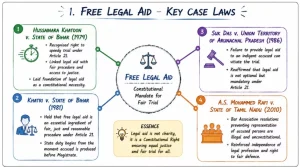
Supreme Court’s Position on the Right to a Lawyer
- Right Extends to Every Accused: In A.S. Mohammed Rafi v. State of Tamil Nadu (2010), the Supreme Court held that every person, irrespective of how serious or heinous the alleged offence may be, has the constitutional right to legal representation.
- Bar Boycotts Are Illegal: The Court declared that resolutions passed by Bar Associations preventing advocates from representing particular accused persons are illegal, unconstitutional and contrary to the traditions of the legal profession.
- Professional Duty of Advocates: The Court emphasised that an advocate’s duty is to defend the rule of law, not to determine the guilt or innocence of the accused, which remains the exclusive function of the judiciary.
- Fair Trial Strengthens Justice: Denial of legal representation undermines natural justice, weakens the legitimacy of criminal proceedings and violates the constitutional guarantee of a fair trial.
UPSC Online Preparation
Professional Ethics Governing Advocates
- Bar Council of India Rules: The Standards of Professional Conduct and Etiquette require advocates to accept briefs unless there are valid professional reasons for refusal, reinforcing their duty to ensure access to justice.
- Duty to the Constitution: Lawyers owe their primary allegiance to the Constitution, the administration of justice and the rule of law, rather than to public opinion or societal pressure.
- Independent Legal Profession: The independence of advocates is essential for protecting constitutional rights and ensuring that justice is administered without fear, favour or prejudice.
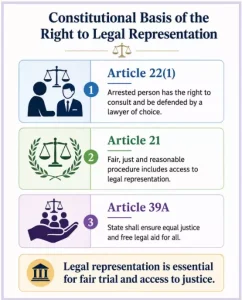
Constitutional Basis of the Right to Legal Representation:
- Article 22(1): Every arrested person has the fundamental right to consult and be defended by a legal practitioner of their choice, ensuring procedural fairness from the earliest stage of criminal proceedings.
- Article 21: The Right to Life and Personal Liberty includes the right to a fair, just and reasonable procedure, making access to legal representation an essential component of a fair trial.
- Article 39A: The Directive Principles of State Policy (DPSP) direct the State to ensure equal justice and provide free legal aid so that economic or social disabilities do not prevent access to justice.
|
Significance of the Right to Legal Representation
- Ensures Fair Trial: Competent legal representation enables the accused to effectively defend themselves, challenge evidence and exercise procedural safeguards guaranteed under law.
- Protects Against Miscarriage of Justice: Legal assistance reduces the risk of wrongful conviction, arbitrary detention and abuse of investigative powers.
- Strengthens Rule of Law: The justice system derives legitimacy from ensuring that every accused receives a fair opportunity to defend themselves, irrespective of public sentiment.
- Preserves Judicial Independence: Courts decide guilt based on evidence and due process, not on public outrage or the seriousness of allegations.
Challenges to Effective Legal Representation
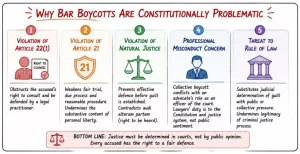
- Bar Association Boycotts: Collective resolutions refusing to represent particular accused persons undermine constitutional guarantees, professional ethics and the independence of the legal profession.
- Public Pressure: High-profile criminal cases often generate social and political pressure on advocates, discouraging independent legal representation.
- Access to Legal Aid: Many economically weaker persons continue to face barriers in accessing competent legal assistance despite constitutional guarantees.
- Misunderstanding of Professional Ethics: Representing an accused is often wrongly equated with supporting the alleged offence, whereas advocates merely ensure that the legal process remains fair.
Legal Aid and Institutional Mechanisms
- Legal Services Authorities Act, 1987: Provides the statutory framework for delivering free legal services to eligible persons through Legal Services Authorities at the national, state and district levels.
- National Legal Services Authority (NALSA): Promotes legal aid, legal awareness, Lok Adalats and access to justice for vulnerable and marginalised sections of society.
- Court-Appointed Counsel: Courts may appoint legal aid counsel where an accused is unable to engage a lawyer, ensuring that the constitutional right to legal representation is not defeated by financial constraints.
Way Forward
- Uphold Professional Ethics: Bar Associations should strictly adhere to constitutional values and refrain from passing resolutions that obstruct an accused person’s right to legal representation.
- Strengthen Legal Aid: Expand the reach and quality of free legal aid, particularly for economically weaker and marginalised individuals.
- Promote Constitutional Awareness: Sensitise advocates, law students and the public regarding the distinction between defending an accused and endorsing the alleged crime.
- Ensure Institutional Accountability: Appropriate disciplinary action should be taken against professional bodies that violate constitutional principles or obstruct access to justice.
- Enhance Public Confidence: Reinforce the principle that fair trials, independent advocacy and due process are indispensable for maintaining public trust in the criminal justice system.
Click to Know UPSC OnlyIAS Coaching Centres
Conclusion
The constitutional guarantee of legal representation protects not the alleged offence but the fairness and legitimacy of the criminal justice system. By ensuring that every accused has access to competent legal counsel, the judiciary upholds the rule of law, natural justice and the constitutional promise that justice shall be administered without fear, favour or prejudice.
 1 Jul 2026