Subject: GS 2: Polity & Governance
Context: On the occasion of the 20th National Statistics Day (29th June 2026), the Ministry of Statistics and Programme Implementation (MoSPI) released a series of crucial publications tracking India’s progress toward the United Nations Sustainable Development Goals (SDGs).
- National Statistics Day is celebrated annually on June 29th to commemorate the birth anniversary of Prof. Prasanta Chandra Mahalanobis, recognizing his invaluable contribution to the fields of economic planning and statistical development in India.
Best Online Coaching for UPSC
Key Publications Released
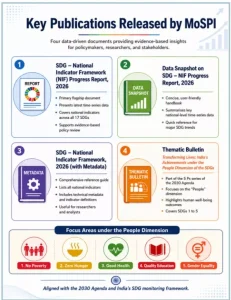
- SDG–National Indicator Framework (NIF) Progress Report, 2026: The report presents the latest time-series data on India’s national SDG indicators and monitors progress across all 17 Sustainable Development Goals, providing an important evidence base for policymaking, programme implementation, planning, and research.
- Data Snapshot on SDG–NIF Progress Report, 2026: It is a handbook version of the Progress Report that presents national-level SDG indicator data in a concise and user-friendly format for quick reference.
- Sustainable Development Goals–National Indicator Framework, 2026 (with Metadata): The publication contains all 277 national SDG indicators along with detailed metadata, including definitions, methodology, data sources, and periodicity for each indicator.
- Transforming Lives: India’s Achievements under the People Dimension of the SDGs: The thematic bulletin highlights India’s progress under SDGs 1 to 5, showcasing major policy initiatives relating to poverty reduction, food security, health, education, and gender equality, while reaffirming India’s commitment to “Leave No One Behind.”
Key Features of the National Indicator Framework (NIF)
- Comprehensive Monitoring Framework: The National Indicator Framework (NIF) has been developed by MoSPI in consultation with NITI Aayog, line Ministries, UN agencies, and other stakeholders to monitor India’s progress towards achieving the SDGs.
- Comprehensive Indicator Coverage: The NIF 2026 comprises 277 national indicators covering all 17 Sustainable Development Goals, thereby providing a standardized national monitoring framework.
- Evidence-Based Governance: The framework supports data-driven policymaking by providing reliable, periodic, and comparable statistics for planning, implementation, and evaluation.
- Annual Assessment: MoSPI releases the SDG-NIF Progress Report every year on 29 June (Statistics Day) to periodically assess India’s SDG performance.
Major Highlights of the SDG-NIF Progress Report, 2026
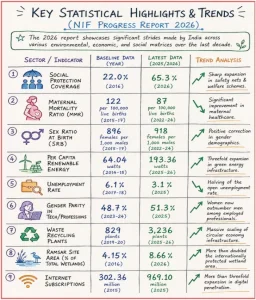
- Expansion of Social Protection: The proportion of the population covered under social protection systems increased from 22% in 2016 to 65.3% in 2026.
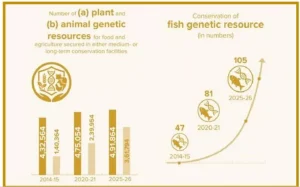
- Conservation of Genetic Resources: The number of plant, animal, and fish genetic resources conserved has increased significantly, reflecting sustained progress in biodiversity conservation for food and agriculture.
 Improvement in Maternal Health: The Maternal Mortality Ratio (MMR) declined from 122 (2015–17) to 87 (2022–24) per one lakh live births.
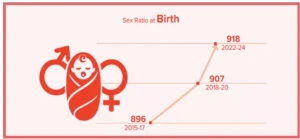
- Progress towards Gender Equality: The Sex Ratio at Birth improved from 896 to 918 females per 1,000 male live births, while the female-to-male ratio among professionals and technical workers increased from 48.7% to 51.3%.
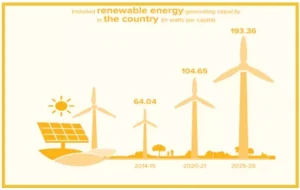 Expansion of Renewable Energy: The installed renewable energy generating capacity increased from 64.04 watts per capita in 2014–15 to 193.36 watts per capita in 2025–26.
- Improvement in Employment: The unemployment rate declined from 6.1% in 2017–18 to 3.1% in 2025.
- Strengthening Waste Management: The number of waste recycling plants increased from 829 to 3,236 during the period.
 Enhanced Wetland Conservation: The proportion of wetland area designated as Ramsar Sites increased from 4.15% to 8.66%.
- Expansion of Digital Connectivity: The total number of internet subscriptions increased from 302.36 million in 2015 to 969.10 million in 2025.
Significance of the Publications
- Strengthen SDG Monitoring: The publications provide a robust statistical framework for monitoring India’s progress towards the Sustainable Development Goals.
- Promote Evidence-Based Policymaking: They enable governments to formulate targeted policies based on reliable and regularly updated statistical evidence.
- Improve Transparency and Accountability: Periodic publication of SDG indicators enhances transparency in development planning and outcome assessment.
- Support International Commitments: The framework enables India to fulfil its reporting commitments under the UN 2030 Agenda for Sustainable Development.
- Facilitate Data-Driven Governance: The reports strengthen the use of official statistics in planning, programme implementation, and performance evaluation.
Click to Explore UPSC Offline Coaching
Conclusion
The National Indicator Framework Progress Report, 2026 reinforces India’s commitment to evidence-based governance by providing a comprehensive assessment of progress towards the Sustainable Development Goals. Strengthening statistical systems and improving data-driven policymaking will be crucial for achieving inclusive, sustainable, and resilient development by 2030.
 1 Jul 2026